Sunday, February 20, 2022

When Is It Time To Modernize An Elevator?


As a building owner, condo board member or property manager, the thought of modernizing elevators, if you have not done it before, is incredibly confusing and complicated.  Even for property owners who have gone through the process, it becomes a challenging task because there are a lot of questions from shareholders[residents, unit owners, owner groups].

The intent of this quick blog is to help identify when it is time to think about modernizing your elevator equipment.

When should I think about modernizing our elevator equipment?  This is a great question and each building will have a different answer.  We have buildings that have their elevator equipment for 60 years, we have building’s that would like to replace their elevator equipment every 15-20 years.  Our biggest recommended take away from this information is to be informed.

How each elevator is different

Usage – Some buildings are sleepy, some buildings are busy.  A care facility and a 9 unit condominium have a very different traffic schedule each day.  A busy building will require more maintenance if possible [see maintainability]

Environment – Is the elevator exposed to the elements, is the machine room or hoistway right by the laundry area vent which shoots lint into the machine room, is the elevator room in the garage and cold in the winter and hot in the summer, are there residents in the building that can treat the elevator better and not punch out the buttons or hit the doors on a regular basis. 

Reliability expectations  We have a 4 unit buildings that have no elasticity for the elevator being out of service and want their equipment brand new all the time.  We have buildings that have 60 year old equipment that are ok with regular shut downs.  How does the building feel about their equipment being in service, how reliant is the building on their elevator system.

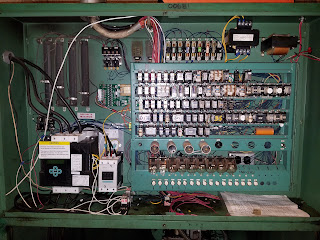
[CJ Anderson controller from 1964 - original to building]

Replacement equipment availability – Are there parts available to replace the elevator’s equipment if it requires it?  Do you have a Dover DMC that just had their parts line retired?  Do you have a US elevator that is one power outage away from waiting 4-6 weeks for a new controller because parts are not available. 

[Dover DMC - Obsolete - Not supported by OEM]


Elevator mechanic domain knowledge – As our elevators age, so do the technicians that know how to work on the equipment. Typically the elevator mechanics who installed the equipment during construction or modernization end up becoming maintenance technicians. As elevator technicians retire, they take their knowledge and experience with them. In our area we had a lot of great technicians who were incredible with US elevators installed in the 1970’s. Well, those guys and girls who know this stuff like the back of their hand are hanging up their cleats.

[US Elevator - fewer and fewer mechanics with domain knowledge]

[Montgomery MiProm - fewer and fewer mechanics with domain knowledge]


Maintainability – Do you have a building that allows the technician to take the elevator out of service to change door rollers, bearings, chains, lubricate, etc?  We have some buildings who pay for maintenance but will not allow us to take the conveyance out of service to work on the elevator.  In this event we do what we can, we do equipment replacement when the elevator is out of service, but this situation makes it very difficult to do preventative maintenance and extend the life of the overall system.

Proprietary equipment – Does the building want to have equipment that the only elevator company that can successfully navigate repairs and get replacement parts is the company who installed it?  Many buildings are replacing newer equipment to get away from proprietary equipment.  I was at a building on Thursday who has had enough of their elevator company but didn't realize what they had and the limited choices they have.

[Otis Gen 2 elevator controller]

How popular is your controller platform in your market – You can have a newer elevator controller but it never took off in the market you are in.  If this is the case then you will not have too many technicians familiar with troubleshooting.

[US Elevator Accession 1000 - Not a many in the Chicago market ]


Equipment replacement philosophy

Proactive replacement – Our recommendation for buildings is to understand the useful life of their elevator systems and how long it will last before it becomes problematic.  We[Colley Elevator] try to get in front of buildings to let them know that your elevator has X time period before you may start experiencing problems.  These problems can be reliability issues, safety issues, or replacement part acquisition challenges.  Talk to your elevator service provider and get some timelines and dates of their recommendations and understand your equipment.  We like to see buildings put their elevator in the reserve study and schedule for replacement or at least have funding available.  If 5 years go by and the elevator is scheduled to be replaced, if there are no issues with the elevator and a façade repair comes up for replacement, maybe you can push it for a year, but at least you have the funding available and can make a good decision for the building. 
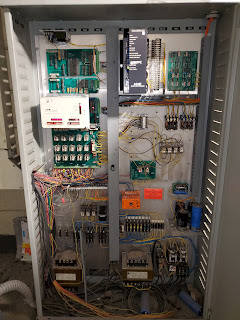
[MCE black box - OEM support/replacement may be challenging]

Reactive replacement – What we try and discourage is to run the equipment in the ground or have a potential doomsday event when your circuit board goes out and there is not a replacement available and you have to rely on a circuit board repair shop to give you a moon shot at getting your elevator back running.  You can also have an issue at the building where an elevator installed in 1967 has a leveling problem when someone trips out of their elevator and there isn’t a clear path to return the elevator back to a safe and reliable working condition and you have a difficult choice to make with the elevator contractor to repair[if possible] or replace.  If you are in the reactive category you may also need to deal with how to fund this modernization project quickly which is its own challenge. 

[ERM - Original to building - Domain knowledge almost non existent - Not supported by OEM]

Take away – Learn about your elevator equipment, ask your maintenance technician, have your elevator contractor send you information, come to a board meeting, do an equipment walk through with the key building people.  A few important things to take away; elevator modernization is expensive, elevator modernization can be confusing, and elevator modernization may require other trades to be involved. What helps is having someone from the elevator contractor to educate you and give you the tools to be successful in planning.

If you have any questions or would like additional information feel free to contact me at CraigZ@colleyelevator.com or 630-766-7230 ext. 107.

Saturday, February 12, 2022

Two Way Elevator Visual Communication ASME A17.1 2019 IBC 2018 Code Requirement - State Of Illinois


[New camera - text display on all A17.1 2019 code elevator car stations]

We have a newer code to benefit hearing impaired elevator riders in the State of Illinois. There are a lot of questions on how to execute on the elevator contractor, municipality’s call center & building owner side.  On the outset it appears it is a confusing and daunting addition to our work and building owner requirements. The only item we are really adding is an internet line and additional 110 vac outlet to the elevator machine room. And then we need more education for elevator personnel, emergency services, building owners, inspectors and anyone involved in this part of the elevator installation/emergency communication.


[This is the portal we see when we log into the Smartview link]


New municipality of call center requirements

Ability to sign on to the internet and get to the portal needed for visual/texting communication.

New building requirements

An internet line, live CAT 5/6 line using DHCP

Additional 110 vac outlet for visual equipment plug in

There is a great short video that Rath Communications developed showing the new system and how it works.

https://www.rathmicrotech.com/visual-communication.html


How it works

 A phone call is placed on the elevator emergency phone

a.    If two way communication is established – follow normal procedures(speak to person)

b.    If two way communication is not established – log onto the Smartview portal, enter the elevator specific passcode and get a visual in the elevator. You can communicate through with the texting feature.   The Rath Smartview portal has an internet link that can be signed in from anywhere

How does the elevator passenger communicate with emergency services – There is a yes and no button on the bottom of the car station that will allow the person in the elevator to communicate with the emergency services person. 

What if my municipality does not have the ability answer these visual calls? There are several call centers that can be engaged.  One of which is Kings III, click link below. 

https://www.kingsiii.com/elevator-code/

Where is my code to sign in – The code to sign in is located on the back of one of the car station devices.  This should only be retrieved by the elevator contractor and given to the appropriate emergency services parties. The elevator contractor should put the Rath # on the voice recording on the phone message when it plays back to emergency services.

If you have any questions or would like additional information feel free to contact me at CraigZ@colleyelevator.com or 630-766-7230 ext. 107.

Sunday, February 6, 2022

Elevator Picture Hall of Fame 2022 – Superbowl of Elevators

The Hall of Fame posts are typically some of the more popular blogs in the Colley blog history. Throughout the year, we get to see a lot of elevators during our initial visits for pricing or engineering for projects.  Of the hundreds of elevators and thousands of pictures we look at, these are some of the gems we've seen this past year.


Hi Otis – Everyone knows Otis Elevator right?  When I tell someone I work in elevators they say “Otis Elevator”, I say “yes, kinda same thing but different company”.  This was a site survey at a building who was looking for an alternative to Otis Elevator for maintenance.  It reminds me of the semi trucks that get “CLEAN ME” written on the back of the trailer when the trailer hasn’t been cleaned in some time or going through a spell of bad weather.


Snakes on a Plane – In 1995 I was in high school doing a record label and met a great guy named Gabe on Prodigy who was in a band called the Humble Beginnings from New Jersey.  For those who do not know what Prodigy is/was, it was an early online dialup platform with chat rooms.  We finally met in real life a few times at shows at the Underdog Loft – Chicago, IL, back yard show in Hoffman Estates, IL and at a few Warped Tours.  Gabe went on to a few bands that had success but in my opinion his coolest song was “Snakes on a Plane” while he was in a band called Cobra Starship. That song was later featured in the movie "Snakes on a Plane" that starred Samuel L. Jackson, Julianna Marguiles, and Kenan Thompson among others.  About the picture, we had 70+ years of elevator experience in a room the day the elevator mechanic sent this picture over from a new account. Seeing this snaky traveling cable was a first for all of us. Another good reference would be the 1989 WWF Survivor Series reference when Hulk Hogan, Jake the Snake and Demolition partnered up and Vince McMahon wanted all of them to carry a 250lb+ snake out to the ring during their match with Ted Dibiasi The Million Dollar Man, Zeus and Powers of Pain.  Jake said "if everyone is supposed to be afraid of my snake how does it make sense if we are all carrying it out to the ring, its kinda ruining my schtick". To make a long story short, this traveling cable needs to be replaced.


Swim Lessons – This is a very large pit, with a very large amount of water in it.  We made one of the probationary apprentices dive for an Allen set the mechanic threw to the back of the pit.  For his success, the wet probie got to buy coffee for the team the following morning.  I am 100% not serious whatsoever about making a probie get in this water.


Jeepers Creepers – Overall this is a creepy pit


R2D2 – One of the first VHS tapes I learned to use in my family’s 2 piece VCR was Star Wars.  This reminds me of R2D2 on the X Wing during the Empire Strikes Back.  Since then I have been an avid Starwars fan. Jorus C’Baoth, yes I know him! A creative way of coving a hole, not necessarily protecting the tank from contaminants.


No Life Guards on Duty – Fortunately, as an elevator industry we have gotten much better at this.  Make sure we mark the controller cabinet for the electricians if you are not going to be there or you will get this. 


I Don't Like You Sales/Office Guy – If you don't like your sales guy[girl]/office guy[girl] send him/her pictures like this and tell them you need a repack.


PVC Dump – This was a creative way to get rid of splashing in the power unit.  While there is no pressure on the dump, I’m not sure PVC and hydraulic fluid mix very well because of some additives and cleaners in hydraulic fluid. A good piece of steel pipe would be a great fit in the long run.

If you have any questions or would like additional information feel free to contact me at CraigZ@colleyelevator.com or 630-766-7230 ext. 107.

Sunday, January 30, 2022

3D Door Scans – New Elevator Code A17.1 2019 – State Of Illinois


As of 5/25/21 the State of Illinois adopted A17.1 2019 which means we require all sorts of new gizmos including a new style 3D door scan.  This means 2 things; you get a safer elevator and it will be more expensive. 

In the State of Illinois we are required to install 3D door scans when:

        1. We replace a safe edge or electric eye

        2. We modernize an elevator system 

        3. We install a new construction elevator

In the State of Illinois we are not required to install a 3D door scan when:

        1. We replace it for a like door scan

How does it work? Detection of approaching objects

Detection of approaching objects/persons is now mandatory. The aim is to ensure that approaching objects trigger the doors to open, thus reducing chances of being hit by the closing elevator doors. The code states that an object of  an 8" diameter and 40" height will need to be detected at an approaching speed of up to 3 ft/s within a defined detection zone.

The design requirements within the code call out the detection of ‘ultra-flat matte black’ and ‘glossy white’ color targets. As matte black surfaces absorb infrared (IR), conventional 3D detection solutions based on IR technology will be unable to detect the target.

[detection objects required for testing]

The detection zone, wherein objects must be detected when moving towards the doors, is described as between 20” and 9” from the landing side face of the hoist way door and 9” ahead of the leading edges of the doors. This area will decrease in size as the doors begin to shut. Once the leading edge of the doors are within 18” of the fully closed position, the detection device is permitted to become inoperative, unless there is a 2D trigger before the doors are fully closed.

Rendering inoperative of a 3D detection means

The rendering inoperative requirement for 3D detection focuses on 2 things:

    1. Once the leading edge of the doors are 18” from the closing point (i.e. the other door or door jamb) the 3D detection device is permitted to become temporarily inoperative. For reference the 2D detection is required to stay active until 0.75” from the door / door jamb.

    2. The second point relates to how long after a trigger the 3D detector is supposed to stay active. After the first 3D trigger the detection device is required to stay active for 20 seconds. Once the 20 seconds is over, the 3D detector is permitted to be made temporarily inoperative and the doors will begin to shut unless there is a trigger in the 2D detection zone whereby the 20 second count will begin again.

What does a 3D door scan do differently than a 2D door scan?  The traditional 2D door scan rides on the elevator and will detect an object or person when it breaks the threshold of the elevator's car door.  The intent of the code change is to catch a person or object so it doesn't get caught between the car door and hatch door.  You know, when you run to catch an elevator and put your hand in the door way hoping the door reopens?  We want to reopen the door so people's hands aren't getting caught in the hatch door if they don't break the car door beam.

What if I installed a 3D door scan years ago, do I comply?  Probably not because that generation of door scans didn’t work very well.  Some had cool light up colors, some had some promises, but most didn’t work to today’s code requirements. 

Who sells 3D door scans?  Lots of great vendors sell solutions for 3D.  If I missed one, let me know so I can put a link up.

Formula Systems - Vision Plus - formula-systems.com/product/vision-plus/

Janus - Janus Smart 3D – avire-global.com/us/products/elevator-light-curtains/smart3d/

Cedes CabSafe - cedes.com/en/application-markets/elevators/

Unitech - Optiguard Shield - unitecparts.com/elevators/elevator-products/door-protection-device-optiguard/

Adams - Cedes IMS 100 NT - adamselevator.com/products_3d_door_sensor.asp

Testing & code requirement reference – Avire - avire-global.com/us/market-insights/3d-detector-requirements-in-asme-17-1-csa-b44-2019/

If you have any questions or would like additional information feel free to contact me at CraigZ@colleyelevator.com or 630-766-7230 ext. 107.

Sunday, January 23, 2022

Colley Cares - Chicago Land Elevator Company Gives Back!


Last year we committed to extend some of our charitable outreach. The more we sell, the more we donate. As a group we targeted 5 organizations to support in the 4th quarter of 2021.   We will also continue to support the organizations we have supported for many years. Colley Elevator will be donating an additional $1,900.00 amongst the following 5 great causes.  We have given over $12,000.00 in 2021 to our 2021 line up.  I have included how we got to know each of the organizations and why they mean something to us. Get to know them and if you feel so inclined, give them a few bucks. 


Pillars Community Health – A healthcare organization that is committed to meeting the changing health and social needs of the western suburban residents.

Colley Elevator has been servicing buildings for Community Nurses out of La Grange, IL for the last 40-50+ years. Pillars and Community Nurses merged to form Pillars Community Health. Pillars Community Healthy is a phenomenal organization that you should get to know! I have a deep appreciation for everything they do day to day!


Ray Graham Association – Founded in 1950, Ray Graham Association serves nearly 2,000 people with disabilities and employ about nearly 350 people. Ray Graham enriches lives by empowering those we support and those who care for them to reach, grow, and achieve. Thank you for being a part of this life-saving and life-giving mission.

I got a phone call from a person who I dealt with at a facility for many years and he had a new gig at Ray Graham and wanted us to take a look at his elevator.  I walked in and saw the wonderful work the people at Ray Graham are doing and learned about their organization.  Before I even left the building I thought of them as one of our Colley Cares causes.  RG has a facility right by my house and I ride my bike by it with my kids frequently, now I know what they do.  Get to know them!


NEDSRA website


NEDSRA – Northeast DuPage Special Recreation Association improves the quality of life for thousands of people with disabilities each year by providing them with a variety of recreational and social programs. The programs are offered in partnership with eight park districts and three village recreation departments.

We had a phone call for an opportunity that was nearby. When we stopped in, we talked about what the organization does. In the end, we helped them out with their elevator and are now their service provider. It's been a pleasure getting to know this group which is doing wonderful things. One of our coworker’s family members has had great experiences with the service offerings that NEDSRA provides.


Greater Chicago Food Pantry – A united community effort working to bring food, dignity and hope to our Cook County neighbors.

Something we may take for granted is having a meal on the table. Some people cannot take that for granted and this is one of the organizations that is there to help them in their time of need. No one should go to bed hungry, go to school hungry or have to worry where their next meal is coming from. This is one of the organizations that Colley fundraised for last year and donated a few thousand dollars to.


American Cancer Society – Simple mission – free the world from Cancer.

This group puts up the good fight and we all know people who cancer has touched.  Lets fund the group looking to eradicate the heartache this cellular mapping reproduction disfunction creates. 

Every quarter we will be choosing new organizations doing great things. If you have an organization that is doing great things and want to be considered, please email me at Craigz@colleyelevator.com. And if you have time to read this blog you have time to get your credit card and pick one of these great organizations to give a few bucks to. Some people are not as fortunate as you, give back, it will feel great!
If you have any questions or would like additional information feel free to contact me at CraigZ@colleyelevator.com or 630-766-7230 ext. 107.

Also check us out on Instagram @Colleyelevator see what we have been up to.

Saturday, January 15, 2022

Hydraulic Freight Elevator Modernization – Evanston, IL


We recently turned over the first of a multiple car modernization that was the heart and soul of the building, the freight car.  This elevator is in charge of food service, materials, construction, storage and all other heavy lifting.  Since freight elevators are a niche within a niche industry, I am always pretty stoked to get a chance to work on them and work with the different vendors that are only freight elevator suppliers.  After we completed and visited the building to do the final equipment review, I saw this freight car being used and abused nonstop by the building, food service, contractors and anyone in-between to get everything where it needed to go and it didn’t skip a beat.  Great work Colley field teams!

Existing elevator & project scope – The old elevator system was an Otis Elevator from 1962 with all original components; Otis Elevator controls, Otis Elevator freight doors, Otis Elevator hydraulic power unit.

New equipment providers

Controllers – Motion Control Engineering

Door operators – Peelle Doors wireless

Fixtures – Innovation Industries

Power unit – Quality Elevator w/Maxton UC4 control valve

Elevator controllers – The existing elevator controller was an Otis Elevator hydraulic controller from 1962.  The new elevator controller is a Motion Control Engineering hydraulic elevator controller.

[New MCE 2000 hydraulic elevator controller]

Freight door equipment – We replaced the existing Otis Elevator automatic freight doors with Peelle Company freight door equipment.

[Old Otis Elevator freight doors & hall station]

[New Peelle freight doors & Innovation Industries hall station]
[Old Otis basement freight door]

[New Peelle basement freight door]

Elevator fixtures – The old Otis Elevator hall and car stations where removed and we installed Innovation Industries fixtures.  We also installed an additional car station for the building as it is helpful to have 2 car stations on this walk through elevator. This helps multiple people, loading multiple loads at the same time, get in the elevator.

[Old Otis Elevator car station]

[New Innovation Industries car station]

Hydraulic power unit – The existing hydraulic power unit was the original Otis Elevator dry unit and was replaced with a Quality Elevator hydraulic power unit.

[New Quality Elevator hydraulic unit with Maxton UC 4 valve]

Machine room layout – The modernization let us lay out the machine room so you actually had room to work on the elevator and open up the room.

[Old elevator machine room]

[New machine room layout with MCE controller & Quality power unit]

Elevator electrical -  With this project we had a freight car with automatic doors, generator hook up and a shunt trip.

[New elevator electrical]

Experience – This elevator modernization's first look was in April 20’ when COVID was unknown and scary. We had a walk through with 15+ people in a sensitive building and a bunch of contractors, GC’s and building owners.  We were fortunate enough to have the opportunity to work with the building on this elevator, which will be the first of 5 modernizations over the next few years.  Over the last two years, we have worked with 2 GCs, an elevator consultant, building owner, and multiple other trades before we even began the project.  With all of these other people orbiting the project, some helpful some not so much, and COVID surrounding us we delivered a great end product for the building owner.

Team work– The sales person and the project team who finishes typically get the glory on a project.  In between the initial contract sale and the final acceptance are many other people who work on the project to make it successful.  From the truck driver to the engineer to the billing department to the assistance when needed, 14 Colley Elevator employees where involved in the project and we had tremendous team work on it.  Thank you everyone - without you we would not have had such a successful delivery!

 If you have any questions or would like additional information feel free to contact me at CraigZ@colleyelevator.com or 630-766-7230 ext. 107.
Sunday, January 9, 2022

Cold Weather Elevator – How Does Cold Weather Affect My Elevator


We have had pretty warm weather in the Chicago area up until recently, now it is cooooolllldddd!   What happens to your elevator when it gets cold?  Good question. 

Symptoms

        Elevator runs sluggishly

Elevator doesn’t level properly

Doors move slowly and are bumpy

Potential outcomes

People get stuck or trapped in the elevator

Trip and falls

Elevator will not work to service the building 

According to the NEII vertical transportation standard, the temperature of your elevator machine room should be 55 degrees to 80 degrees.  Computer manufacturers recommend an ambient temperature of 60 to 90 degrees.

The temperatures that hydraulic elevators fluid should be is: 

Operating temperature  - 80 to 150 degrees Fahrenheit 

Operating temperature  - 100 to 130 degrees Fahrenheit 

Source - Maxton Valve[www.maxtonvalve.com] - Maxton valve is one of the largest valve suppliers in North America.

Oil composition when it gets cold – When hydraulic elevator fluid gets cold it becomes thicker or has a higher viscosity.  

Viscosity definition - The viscosity of a fluid is a measure of its resistance to gradual deformation by shear stressor tensile stress. For liquids, it corresponds to the informal concept of "thickness". For example, honey has a much higher viscosity than water.

How does this translate to your elevator – In our Chicago area environment we use a certain hydraulic fluid that offers more flexibility between hot and cold environment because of our seasons in the Chicago area.  Due to significant swings in temperature in our environment when it is very cold the oil gets thicker and the valve and elevator system will not operate correctly causing a potential issue with leveling or entrapment.  The reverse occurs when it gets very hot and the oil gets very hot.  Both scenarios cause safety issues for the elevator riders.  If we always had cold or warm temperatures we could use a different hydraulic fluid that would be more appropriate for a hot or cold environment.  But! We live in Chicago.

What not to do – As a building owner it is very important to have your elevator running.  Some building owners take it upon themselves to improvise to get their elevators running on cold days with space heaters.  While the installation of space heaters is a short term solution, it isn't a safe long term solution as you will see space heaters in non-occupied machinery spaces that can malfunction causing smoke and fire hazards.  The space heaters also can overload your electrical circuits causing your breakers to trip.  The electricity costs to run multiple heaters in one year would probably be significantly more than the installation of an elevator tank heater.

[This building owner was resourceful putting a heater on the valve]

[Two heaters on one elevator power unit]

[One heater in the elevator pit]

Recommended solution – use a tank heater.  Pay an elevator company to install a tank heater on the elevator with an on/off switch.  This is a safe alternative to space heaters. 


Take away – If you are having winter issues, talk to your elevator company.  If you are not getting the right answers, call Colley Elevator.  I went to a building for a nuisance issue[not a Colley maintenance account], they described what was occurring, without even walking in the elevator room I told them it was cold oil, they told me they had a space heater in the machine room, when we looked, they did have a space heater and it hadn’t worked all season.  The valve was ice cold.  I’m sure they will go get a new one and when it is in the machine room their inconsistencies will go away.

Hey! Sign up for our mailing list! 

If you have any questions or would like additional information feel free to contact me at CraigZ@colleyelevator.com or 630-766-7230 ext. 107.

Also check us out on Instagram @Colleyelevator see what we have been up to.