Saturday, February 29, 2020

End of Life/Obsolete elevator equipment – ERM Elevator Research Manufacturing & Oliver Williams


This is the 2nd in our series of end of life/obsolete elevator control systems.  This one is a big one for Colley Elevator, we installed hundreds of these elevator controllers in the mid to late 1960’s and early to mid 1970’s.  Colley and ERM had a close relationship for many years and we still take care of many ERM/Oliver Williams elevator controllers.  For many years we have been letting the building owners know that they should consider replacement of these elevator controllers.


Who this impacts – This end of life/obsolete correspondence is for ERM/Oliver Williams controller owners that have controllers from the mid 1970’s and before.


ERM – 18300
ERM – 18400
ERM – 18500
+more

Mention of SSD1 Drives – We have had this letter since 2010 but we didn’t pay much attention to the mention of the World Electronics SSD1 drive that is found on Virginia Controls, US Elevators and other traction elevator controllers of this era.  Our interpretation is that the SSD1 Drive also called the GFC IIA drives are also at end of life and should be considered obsolete. We have had more than a few run ins with these drives and once they go, we have had a hard time resurrecting them to be safe and reliable service with a repair.  World Electronics does indicate on their website they repair the devices and supply new ones.


Take away – If you have any of these elevator controllers or drives you should be planning for a elevator modernization.  Talk to your elevator contractor about reliability, safety and repair concerns you have.   If you have a 1975 ERM controller, that controller is now 45 years old and you now have the end of life letter from the manufacturer.  Get prices and get the equipment replacement on the books.

Hey! Sign up for our mailing list!  Next newsletter will be out in about 3 weeks and you will get one about once a month.

If you have any questions or would like additional information feel free to contact me at CraigZ@colleyelevator.com or 630-766-7230 ext. 107.

Also check us out on Instagram @Colleyelevator see what we have been up to.

Saturday, February 22, 2020

End of Life/Obsolete elevator equipment – Vertitron VH 40 & VH 80


From time to time we have elevator control systems that we used for a period of time in our geographic area that reach their end of life.  Colley Elevator in the 1980’s/90’s used Vertitron VH series controllers for some of our new installations and modernizations.  We have always kept a pretty solid stock of replacement parts and kept the main components when we modernize other elevators. We had an OT call on a VH 80 controller and ended up replacing the blue box and we started talking about “how long will these be able to be repaired”.  We contacted Vertitron and they sent over an end of life letter indicating 2005 was the finish line for these particular controllers.  We probably have 5 or 6 of these left in our portfolio but it is good to know that the end of the road was 15 years ago so we can let our customers know.

What does end of life mean? – This letter means if you have one of these controllers you need to start planing on replacing the elevator equipment.  If you cannot afford to replace or do not want to replace, make sure your elevator contractor has spare parts and can service your elevator so you don't have an elevator out of service for weeks or months waiting on a new controller.

Technology for the time – The technology for the time was pretty cool.  It was a controller that had earlier solid state technology and a 3 board system that was fairly versatile.   To my knowledge it was one of the first nonproprietary controllers that used a hand held device called “PET”.


Chicago FEO implications – If you have a Chicago FEO phase II violation and have a Vertitron VH series controller you should replace it as anyone saying they can make it work either are elevator wizards or do not know what they are doing.

Ongoing technical support – Minnesota Elevator has owned Vertitron for a number of years and they still sell new controllers.  The folks at Vertitron have always been wonderful about repairs and technical support.

Hey! Sign up for our mailing list!  Next newsletter will be out in about 3 weeks and you will get one about once a month.

If you have any questions or would like additional information feel free to contact me at CraigZ@colleyelevator.com or 630-766-7230 ext. 107.

Also check us out on Instagram @Colleyelevator see what we have been up to.

Saturday, February 15, 2020

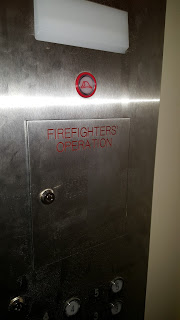
History of Elevator Firefighters Emergency Operation


I have wanted to share this information for some time.  This is the history of Elevator Firefighters Emergency Operation.  It is interesting on how the elevator code requirements have changed over the years in reactions to different events.   The big event that escalated adoption and alternate floor recall was a fire at the MGM Grand Hotel and Casino in Las Vegas Nevada in 1980. 

Significance of MGM fire - The burning material created toxic fumes and smoke, which ascended throughout the hotel tower via vertical shafts (elevators and stairwells) and seismic joints and caused the majority of the deaths.  Firefighters reported having to crawl through the dark and over "mounds of stuff" trying to extinguish the fire, it was later determined that the "mounds" were deceased guests and staff near an elevator bank.  Proper evacuation of the hotel guests was hindered as there was no automatic means of returning elevators to the main floor during a fire, causing 10 deceased victims to be found in an elevator. Survivors recounted how some in the hotel had tied bedsheets together and hung them on balconies in an attempt to escape upper floor rooms and alert first responders.

*wikipedia.org


Definitions

Phase I – Phase I is the key switch that is in the main lobby/egress floor that can be operated by competent persons[elevator personnel, fire fighters trained in FEO and/or other people that have had the proper training as outlined in the elevator code.  This key switch will recall the elevators to the main egress.


Phase II – Phase II is the key switch that is in the elevator that allows competent persons to take control the elevator, typically fire fighters.


Automatic recall – Automatic recall is a trigger that will send the elevator down to a specified floor when a device is set off[smoke, flow switch or approved device].


Alternate landing – Alternate landing is the feature that allows the elevator to land at a non-fire floor; I.e. if the fire is at the main landing the elevator will go to the alternate landing[basement or 2nd floor, whichever is better for building evacuation].  The elevator is hooked up to fire recall devices at each landing, machine room and at times inside the hoistway.

History

ASME 17.1-1973
Automatic Recall introduced in the Supplement.
Phase I – all elevators with 25 feet or more of travel.
Phase II – all elevators with 75 feet or more of travel.

ASME 17.1-1981
Phase II  - all elevators with 25 feet or more of travel.
Audible signals  -   Visible signals
Inspection audible
Machine Room and Main Floor Smokes Required
Alternate Floor Recall
Means of Car Call Cancel


ASME 17.1-1984
Phase II  -  Hold position added to switch.
Car Call Cancel pushbutton added.


ASME 17.1-1987
Firefighters’ Emergency Operation  required of all elevators with 25 feet or more of travel from the Designated landing.

ASME 17.1-1990
In-Car Firefighters’ Hat jewel.
Phase I instructions are specific at hallway key switch.
Phase II instructions are specific in-car.


 Phase I instructions


 Phase II instructions


ASME 17.1-1992
All elevators shall have Firefighters’ Emergency Operation no travel exceptions.

ASME 17.1-1996
“Power Operated” added to in-car instructions.
All elevators with 80 or more inches of travel shall have Firefighters’ Emergency Operation.

ASME 17.1-1998
Flashing Firefighters’ Indicator (FFI) with in-car instructions.

ASME 17.1-2000
Reset added to Phase I key switch.


ASME 17.1-2004
In-Car Firefighters’ Operating Panel added.
Power Monitor (Shunt Trip Monitor) added.


ASME 17.1-2005
“Power Operated” deleted from in-car instructions.

ASME 17.1-2007
Standardized key (FEO-K1) for all Firefighters’ Emergency Operation key switches.


Take away– As we review the evolution of FEO we see changes that are made to make the elevator system safer in the event of a fire.  There is a story and typically a fatality connected to each change in the elevator code.  While the chances of fatality/injury at a building you own, manage, work on, sell to, etc is very small we should all be educating our selves to make our buildings safer.  If you ever question the cost of safety, look in the mirror or think of your family and ask “how much is this life worth?”.

Credit – The MGM information is from wikipedia.org and the FEO history was taken from a document from Joseph Donnelly PE.

Hey! Sign up for our mailing list!  We should be getting a monthly email going out sometime in Q1 of next year.

If you have any questions or would like additional information feel free to contact me at CraigZ@colleyelevator.com or 630-766-7230 ext. 107.

Also check us out on Instagram @Colleyelevator see what we have been up to.

Sunday, February 9, 2020

Elevator cylinder hole collapse – Undermining building


Colley Elevator does a lot of cylinder work, probably the most in the City of Chicago/State of Illinois.  We have experienced a lot of different underground conditions that could create challenges.  Last week we ran into a non-cased hole that was drilled in the late 1960’s that was all clay.  When we pulled the cylinder it didn’t seem promising but we gave it a shot with the vacuum truck and the hole started to collapse.  It is very important to know when to turn of the vacuum truck or you could start to undermine the building.  In this event the project team called it correctly and stopped the undermining before it became substantial and was isolated to the elevator pit.

[Cylinder prior to replacement]


[Hole in ground after cylinder was removed]

[After debris was removed and pit began to be undermined]

Definition of Undermine - erode the base or foundation of (a rock formation).

Potential danger – The potential danger we encounter is to create a foundation issue for the building if we continue to remove material from underneath the building.  Our hole doesn’t get deeper, it gets wider.


 #1 - Shows the elevator cylinder in the ground, in this case it goes down 27'

#2 - Shows the underground undermine potential

Moving forward – A well driller will need to be hired to put down casing to get a clear hole and when they are completed we will back fill the pit to replace any material that was removed during the vacuum truck visit.

Take away – When considering your cylinder replacement project, make sure that the company you are working with has experience with cylinder replacements and has a project team that has the domain knowledge to navigate your project in a safe manner.  Hiring a big name doesn’t necessarily mean that the team managing or completing your project has the correct domain knowledge.

Hey! Sign up for our mailing list!  We should be getting a monthly email going out sometime in Q1 of next year.

If you have any questions or would like additional information feel free to contact me at CraigZ@colleyelevator.com or 630-766-7230 ext. 107.

Sunday, February 2, 2020

Traction Elevator modernization – Indian Head Park, IL


A number of years ago we got invited to bid the door equipment replacement at a building in Indian Head Park, IL.  We visited the building and submitted pricing for doors but recommended modernization of the elevator control system.  2 or 3 years later they called us back and we were fortunate enough to get the opportunity to work with the building.

Existing elevator & project scope – The elevator door equipment was replaced a few years ago and the elevator machines are in decent condition so we recommend retaining the machines for now and plan on replacement in the future.  The elevators were installed by US Elevator and any day you get the chance to replace US Elevator equipment is a good day.  Once upon a time US Elevator equipment ran well and there were plenty of people who were familiar with them.  As the years go by there are fewer and fewer people who have the domain knowledge to effectively maintain US Elevator equipment.  This was the first time I saw a duplex elevator with one running on 208VAC and one running on 480VAC.  I had a few calls and emails from the controller manufacturer asking me if I made a typo on the data sheets.

New equipment providers

Controllers – Smartrise Engineering
Motors – Imperial
Fixtures – Innovation Industries
Roller guides – SEES
Traction safety equipment – Hollister Whitney
Elevator interior – Cab Works

Traction elevator controller – You can look at the old controller and the new controller and see how simple the new controller looks compared to the 1970’s control system.

 [Old]

[New]

[New layout]

Elevator machines– Original Hollister Whitney Machines with new motors and a new paint job.  Machines run great!

[Old]


\
[New]


Elevator fixtures – We installed new ADA compliant Innovation fixtures.

[Old]

[New]

Roller guides – SEES manufacturers replacement roller guides for US Elevators, they worked great! Always important to pay attention to roller guides on Mods!

[Old]

[New]

Traction safety equipment – We installed new governors and rope grippers

[Old]


[New]

Elevator interiors – The elevator interiors were spruced up by Cab Works.

[New]

Kick off & Close out meetings – During any project this size there are bumps in the road.  We had a meeting with the full association prior to starting the project were we outlined the burn in period and potential issues after turn over.  We had some issues after turn over but quickly resolved them.  We had issues with the elevator interior company’s installation, cab looks great but we had to adjust the doors.  We all worked through it and now the cars look great and run great! 

Take away – Since we had free and open communication with the building before, during and after the project small headaches never became large headaches.  We had a great close out meeting and look forward to working with the building for many years to come.  The field team who did the installation did a great job on this one! This was a total team effort on Colley’s part, we had 16 people from the company who worked on the project from the first phone call to the final inspection.  

Hey! Sign up for our mailing list!  We should be getting a monthly email going out sometime in Q1 of next year.

If you have any questions or would like additional information feel free to contact me at CraigZ@colleyelevator.com or 630-766-7230 ext. 107.

Also check us out on Instagram @Colleyelevator see what we have been up to.

Sunday, January 26, 2020

Elevator Preventative Maintenance – How often should my elevator technician come by?


Back ground - We have been getting a tremendous amount of calls for maintenance proposals and more than ½ the time the reason is that the incumbent company doesn’t even show up, but, the building is still being billed.  I only go on a small percent of the walk throughs but I get to see all the pictures and when we are only showing up to take service calls we are deferring maintenance and putting the building owner’s elevator equipment in a compromised position.


What’s the big deal? Elevator maintenance is important because the elevator is most likely the most complicated piece of equipment in the building.  We have hundreds of moving parts on an elevator and it is very important that you have a qualified and competent service technician reviewing your equipment on a regular basis.  If no one is looking at the equipment, cleaning the equipment, etc your issues will snowball to having a elevator that looks like the surface of the moon because no one has cleaned it or having an electrical or mechanical failure because we are not checking the critical components of your elevator system[start contacts, motor brushes, suspension cables, etc].  You also are required to have functioning emergency phones, lights, fireman’s recall, etc that should be checked on a regular basis to ensure they function correctly in the event of an emergency.

How often should someone come?  This is a good question.  Every elevator is different and should be looked at differently.  At Colley we sit down after we visit a building and ask questions like; What kind of building is it?  What is the traffic like?  What is the environment?  Who is using it? Etc.   Ultimately we can give our recommendation for how frequent someone should visit but if the elevator contractor recommends X and the building owner only wants to pay for X minus Y then the  choice for an elevator contractor is to give it to them or walk away from the opportunity.   Make sure when you talk to a potential elevator maintenance company you ask them “why are you recommending quarterly/monthly/bi monthly, semi annual  visits”?  What are my building’s needs.  

Monthly to Quarterly – For many generations the elevator technician has been going to most elevators on a monthly basis.  This has been changing over the last 10 years.  Now we go quarterly or “systematically”.  “Systematically” typically means as little as possible. This goes back to the conversation you have with your current or potential elevator contractor and finding out why they come to your building when they do and if it makes sense for your elevator(s).  The biggest issue with no going to buildings on a monthly basis is who is going to exercise fireman’s recall Phase I & II, it is required to be checked monthly in our elevator code and is a State of Illinois/City of Chicago requirement.

OEMs – The Otis, Schindlers, Kone, Thyssen Krupp’s of the world are very busy and in our area do not have the man power to go to the maintenance stops on a regular basis.  We are seeing deferred maintenance.  We are hearing buildings who call in at 8am and get “if you want someone out there today, it will be after hours at $900.00 an hour”.   There are a lot of great elevator mechanics at OEMs, the issue is they don’t have the hours in the day to complete the required work load.  Some of this is due to looking for short term profits[you remove a few guys here or there and the bottom line looks better], some of this is due to a lack of elevator mechanics available.

Remote monitoring – I am not yet a believer in remote monitoring yet.  I’m sure the different remote monitoring devices have great capabilities to capture data 
There is something to be said about having trained eyes and ears riding your elevator to identify if something doesn’t feel right.  Remote monitoring is a wonderful selling point but I’m not sure how great it works in practice other than allows the company implementing it to not send an elevator mechanic to the building.  I have not seen an elevator monitoring device from an OEM that will tell you if your elevator pit is filled with water or you have a pipe that is dripping on your controller in the machine room that is about to damage your solid state circuit boards. If I’m wrong, please let me know.

[Not sure any remote monitoring system will pick this up]

Take away – Preventative maintenance is required on anything with moving or building critical parts; furnace/AC, alarm systems, sprinklers, elevators, etc.   Your elevator is a huge capital investment and the building’s users rely on it to get around in the building.  Educate yourself on what you are getting from your elevator contractor and it should make sense to you as an building manager, building owner and elevator contractor.  We collectively need to be on the same page on what type of elevator maintenance your building requires.

Hey! Sign up for our mailing list!  We should be getting a monthly email going out sometime in Q1 of this year.

If you have any questions or would like additional information feel free to contact me at CraigZ@colleyelevator.com or 630-766-7230 ext. 107.

Sunday, January 19, 2020

Immediate Stop Use Notice: Guardian SRL-LEs with Stainless Steel or Web Lifelines

This notice is intended to communicate product information regarding Guardian Fall Protection leading edge - compatible self-retracting lifelines (SRL-LE) that utilize a stainless steel or web lifeline. A small number of these SRLs were identified as non-compliant with ANSI Z359.14-14 and must immediately be removed from service. Please ensure the widest possible dissemination of this information.


Hey! Sign up for our mailing list!  We should be getting a monthly email going out sometime in Q1 of next year.

If you have any questions or would like additional information feel free to contact me at CraigZ@colleyelevator.com or 630-766-7230 ext. 107