Saturday, August 27, 2016

Chicago elevator maintenance - "we can do better" or "no time for maintenance"

Over the years I have been involved in the elevator industry I have seen an evolution of what elevator maintenance is.  I work as a contractor in the Chicago area and the evolution is sometimes alarming and difficult for me to wrap my hands around.  In my opinion there are three parts of the elevator maintenance equation; contractors, mechanics and building owners.  We all should have a significant interest in having safe and reliable elevator service. 

Elevator contractors are the maintenance contract holders.  It is the elevator contractor to supply enough people and time to complete elevator maintenance per their agreements with building owners.  It is the elevator contractor’s job to educate the building owner what they need to do to keep their elevators in safe and reliable working order. In the Chicago area we have started to see reduced time to complete elevator maintenance and the elevator technician given less time to do maintenance in a building.  If an elevator technician is not given enough time to complete a series of required maintenance tasks such as checking phone, door locks, emergency lights, fireman’s service, car top inspection, etc. they will not have time to keep their jobs clean and complete proactive equipment replacement such as door rollers, light bulbs, interlock contacts, etc.  I have bumped into mechanics who have told me some buildings they have 6 minute maintenance visits.  The only tasks you can do in six minutes is ride the elevator and go into the machine room and fill out paper work or enter information on your PDA.  Elevator contractors need to give elevator mechanics time to complete elevator maintenance.  Elevator contractors also need to give the elevator mechanic a maintenance control plan so they know what is required to be checked at buildings.

Elevator mechanics are the 2nd part of the elevator maintenance equation. With the changing of the new reality and our industry’s self-induced vision of what “elevator maintenance” is, it is difficult for mechanics to keep elevators running well.   I often say there are two parts to maintenance; time and motivation. Let us assume the elevator mechanic has enough time to complete elevator maintenance on an elevator.  We should be going through our company supplied check list and maintenance control plan to see what is required.  With the information that is supplied by the company we should be following the steps and looking at the safety items first; phone, door locks, door speed, emergency lights, fireman’s service, car top inspection, etc.  Next we should be looking for what needs to be attended to door rollers, light bulbs, and other items that may need to be addressed.  The next series would be to make sure your machine room, car top and elevator pits are clean.  The company should provide a check list and MCP for every elevator that should outline the expectations for each elevator and the company should give the mechanic enough time to complete the tasks associated with their expectations of having a safe and reliable elevator system.  If the mechanics are given the time to complete maintenance they also need to have the motivation.

Building owners are the final part of the equation for successful elevator maintenance.  A building owner should be hiring a reputable company, paying a fair price and taking the responsibility of their elevator systems.  No building owner likes paying more than market price for elevator maintenance.  Typically building owners are cost conscience of what money they are spending on maintaining their building systems.  It is up to the elevator contractors to educate building owners on what they need to do to have safe and reliable running elevators.  The key here is a there needs to be a good line of communication between building owners, contractors and the front line elevator mechanic.  Contractors and mechanics will not win with building owners who do not want to be reasonable with their elevator care.  This is where a building owner needs to be responsible for their elevator systems.  If no responsibility is taken we as contractors and mechanics will struggle giving you safe and reliable elevators.


Over the years I have also developed pride in being a part of the elevator industry, this is more than a job to me.  As a contractor it is alarming to hear building owners talk about not seeing their elevator mechanic.  It is alarming to hear about mechanics having 6 to 15 minutes 4 times a year to maintain an elevator with a full maintenance contract.   It is also alarming when we visit buildings to find elevators that building owners are not taking responsibility in maintaining and replacing equipment.  I believe everyone involved can take measures to improve the safety and reliability of the elevators we have contracts with, maintain or own.  We all need to work together so our elevators run safe.

If you have any questions or would like information from Colley Elevator you can go to www.colleyelevator.com, email Craigz@colleyelevator.com or call 630-766-7230.

Saturday, August 20, 2016

Clean elevator pits and car tops – Chicago, IL

As a person who works in the office I get to see many elevators each week that other companies take care of.  Some are in good condition and some are not in good condition.  Some impress me and some do not.  When I see a clean elevator hoist way it impresses me that the elevator mechanic took the time to clean everything up.   Typically the clean elevators are an indication that elevator has an elevator maintenance program and a proactive elevator maintenance person.

On the flip side of this I used to work with a brilliant elevator person and cleaning was not on the top of his priority list.  But! If you had a broken elevator, he most likely could fix it and/or bail you out.  I think there is a good balance somewhere here.

With the industry wide work load increase, more stops, more tests, more this, more that.  We still try to stress cleaning our elevators up.  I get a frown face from our mechanics when we get a new accounts that are left in a disasters due to lack of care and they will have to bring it up to snuff.  On a Saturday night when a mechanic goes on a overtime call I wouldn’t want to be working on the moon and have to worry about tracking dirt, grease and grim all over the customers lobbies. I've had to take my boots off, go to my car get something to clean my boots off, it has been raining, now my socks are wet, you get the point.

Elevator car tops - This is a car top that the evil empire used to maintain. Before and after. 


[The fan is actually black and not gray - who would have known]

Elevator pits - The first picture is from a building I was at on Tuesday from a library.  The elevator professional told the building he didn't clean pits, it wasn't his job.  The mechanic having a sparkling personality, refusing to clean the pit and the increasing cost of the maintenance agreement is leading the building to change contractors.


[Then you get some buildings who use the pit as a garbage can - This is not the elevator persons job to clean up every month - If this is the case the contractor should be having a conversation with the building owner to curtail the behavior]

[This is a great looking pit - this was not from a building we maintained at the time so whomever did this it looks great!]

Elevator cleaning is always a work in progress.  By the time a mechanic gets a route clean, routes change, new elevators are added, buildings decide to get in the elevator shaft and drill holes in the wall and leave the cars and pits a mess, etc.

Building owners should pay a reasonable price for elevator maintenance to be performed and elevators cleaned.  Companies should give mechanics/apprentices enough time to complete reasonable cleaning.  And if given the time mechanics/apprentices should keep elevators reasonably clean.

If you have any questions or would like information from Colley Elevator you can go to www.colleyelevator.com, email Craigz@colleyelevator.com or call 630-766-7230.

Saturday, August 13, 2016

Hydraulic Elevator Modernization – Bloomingdale, IL

Last December I walked into a office building that was having elevator issues.  The elevators are moderately used and consistently had issues.  The elevators where Dover with a card logic system from mid to late 1970’s.  The building was looking for a solution.  I asked them if they ever thought about modernizing the elevator system.  The person I was with said, the current vendor never brought that idea up.  I said, "what do you think?  It is expensive but it will get rid of your nuisance issues with the older equipment".  He told me to send him pricing.

We ended up getting the modernization project and replaced the equipment with Smartrise Controllers, Innovation fixtures, MEI power units and GAL door operators.

[This was a very tight machine room before modernization]

[New machine room layout gives more room for elevator personnel]


[Car station before]

[Car station after]

[We installed flush mount hall stations and replaced the multi light large Dover P/I directional arrow combo with a combined fixture from Innovation]

I always like seeing the before and after pictures of these projects to see the contrast of what they looked like before and after. Elevators are now running great!


If you have any questions or would like information from Colley Elevator you can go to www.colleyelevator.com, email Craigz@colleyelevator.com or call 630-766-7230.

Sunday, August 7, 2016

Elevator maintenance control plan [MCP]

There is a lot of talk about what is required for an elevator maintenance control plan.  An elevator maintenance control plan is required on all elevators in the State of Illinois[including Chicago].  There is some confusion what is an acceptable maintenance control plan and the appropriate delivery method.

What is a maintenance control plan?  The maintenance control plan is the plan that the contractor has with the building to maintain the elevator system.  It should give the owner, mechanic, inspector and anyone else involved a run down on how the elevator is maintained.  It should be similar to a manual for your car.  It will tell you the following;

1.    Equipment age, condition and accumulated wear
2.    Design and inherent quality of the equipment
3.    Usage
4.    Environmental conditions
5.    Improved technology
6.    Manufacturers recommendations for any SIL rated devices or circuits
7.    Cleaning, lubrication and adjusting schedule
8.    Tests on the equipment & schedules per A17.1 8.6
9.    Code required written procedures for maintenance, testing and inspections
10. Maintenance records
11. Procedures for testing
12. Unique product specific procedures required to test equipment
13. Procedures on how to maintain the specific elevator

For a list of all the requirements look at A17.1 8.6.1.2.1

There is a lot to a maintenance control plan. While maintenance records are a component of the maintenance control plan they are not THE maintenance control plan, they are only records.

Many companies in the Chicago area use stickers saying “call 1-800-Elevator-Company for the maintenance control plan”.  This is fine as long as you have a delivery method for the maintenance control plan for the elevator personnel that is on site.  This would mean it can be delivered or emailed quickly to the inspector WHEN HE OR SHE IS ON SITE.  This would also mean the inspector would need to have email and a device to read the maintenance control program. Some companies have a CD in the elevator room, unless the inspector has a device to read the maintenance control plan this may not work as well as it most likely is not for that specific elevator in that specific building.  Some companies have books that include hydraulic elevators, traction elevators and escalators this may not pass as it is supposed to be for one specific elevator in that specific building.

In the City of Chicago they most likely will be requiring a hard copy of the maintenance control plan in the elevator machine room soon.  I believe the hard copy in the machine room is the most logical delivery device for the required information.

The requirement for a maintenance control program is being rolled out in many states and if you do not know what it is get familiar with it, ask your maintenance company and get one in your elevator machine room.  Inspectors will be requiring this shortly if they have not asked for it already. 

The requirement for a maintenance control plan has been in the elevator code for a number of years.  Why now?  After a few accidents in the State of Illinois it brought the importance of a maintenance control plan to everyone’s attention.

If a building does not have a maintenance program with a elevator contractor you will need to get one in order to have a maintenance control program.  You need a State of Illinois license to work on elevators therefore it would be appropriate to have an elevator maintenance provider write your maintenance control program.

When an elevator is altered or modernized an updated maintenance control program for that specific equipment should be in the elevator machine room.  The maintenance control plan is a living document that will change due to equipment replacement, age, usage, etc.


If you have any questions or would like information from Colley Elevator you can go to www.colleyelevator.com, email Craigz@colleyelevator.com or call 630-766-7230.

Sunday, July 31, 2016

Traction elevator motors – Foot vs Flange

One of the main questions we get asked when ordering controller systems when keeping existing machines is if it is a foot for flange mount motor.  When I first started ordering equipment I had no idea what the difference between them was and said “what’s the difference, put the order through and we will figure it out”.  Well there is a big difference, I learned this the hard way after many visits to a building getting the different pieces of information.  Nothing ground breaking here, just some information on the difference between the two traction motors.

Foot mounted motors - As the name describes, this motor has feet it sits on.  This motor is an interesting motor with what looks like a fan on top.


Flange mounted motors - This is mounted with a flange and sticks on the machine, there are no feet.


Flexible couplings - This is a huge time saver and will improve ride quality.  If you don't know what this is, check it out!  Electrical Motor Repair company has a pretty good product to help with the installation of new motors. 

http://www.elevatormotor.com/


If you have any questions or would like information from Colley Elevator you can go to www.colleyelevator.com, email Craigz@colleyelevator.com or call 630-766-7230.

Sunday, July 17, 2016

Elevator preventative maintenance – City of Chicago

Over the last several weeks we have been to many buildings in the City of Chicago visiting older elevator equipment.   I was reviewing a portfolio of buildings that need pricing for maintenance agreements, violations and mandate work and when going through this on Saturday night I saw some interesting items.

As elevator professionals it is our job to do the best we can with the equipment we are maintaining.  As elevator companies we are to guide building owners to the correct decisions on a good maintenance program for the building and give mechanics time to complete maintenance.  As building owner you are responsible for contracting with the responsible vendor and take recommendations for equipment replacement and a good maintenance program.

I’m not sure where the ball dropped on these buildings but it is apparent someone fell asleep at the wheel.  Some of these situations do not happen over night it is years in the making.

[Pit full of water or oil]


Take away

Building owners – Hire a responsible elevator contractor, least expensive is not always the best.  Most expensive is not always best.

Elevator companies – Make sure the elevator mechanics have time to complete elevator maintenance at buildings.

Elevator professionals – If the company gives you time to do elevator maintenance, do something with the time. If you do not have time to do maintenance and want to do maintenance.  Find a company who will give you time to do maintenance.

While the three points above appear to be black and white, please note there are so many variables for each entity that throw a wrench in the simple formula.  Building owners had a good elevator company whose management changes[and it becomes a not so good company], elevator companies have personnel changes, elevator professionals get over burdened with broken elevators or encounter strange problems that occupy more time than anticipated to repair. 


If you have any questions or would like information from Colley Elevator you can go to www.colleyelevator.com, email Craigz@colleyelevator.com or call 630-766-7230.

Sunday, July 10, 2016

Anatomy of a hydraulic power unit

I found this in my email and it has some great information.  This is a repost from https://schmelevator.wordpress.com.

Fixed Pump

The anatomy of a hydraulic power unit

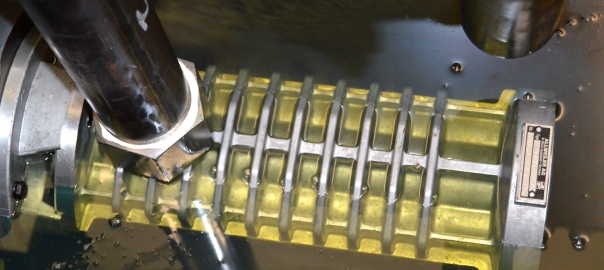
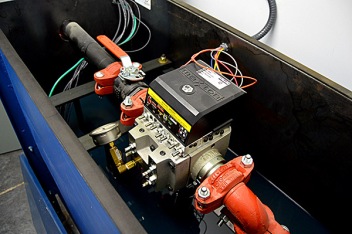
A hydraulic tank with a submerged pump, valve and motor.When it comes to hydraulic elevators, there is a crucial piece of the system that often goes unnoticed. It gets little attention because on the outside, it looks like a big rectangular box.
Little do most people know that this box is actually filled with the components and the oil that make the elevator move. Without the tank and all of the parts inside, the jacks won’t go up or down and the elevator won’t move. So let’s peek inside the box and see what makes everything work.
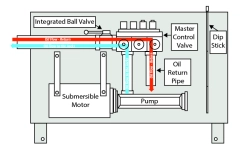
The hydraulic tank consists of the following components:
  1. Tank
  2. Submersible Motor
  3. Pump
  4. Master Control Valve
  5. Negative Pressure Switch
  6. Integrated Ball Valve
  7. Vibration Damping Mount
  8. Dip Stick
  9. Oil Return
  10. Muffler
  11. Hydraulic Oil

Tank Final-01
A basic tank diagram.
Tank  – The tank has the primary purpose of holding the oil that raises the elevator, but it also houses the other important components. The size of the tank is dependent upon the number of floors and the components required, and Phoenix Modular Elevator has several sizes of hydraulic tanks to meet any need. In general terms, most two-stop elevator tanks hold approximately 80 gallons of oil.
Submersible Motor – One of the reasons that a tank seems so unremarkable is that the primary components all fit inside the tank, including a motor designed to remain submerged in hydraulic oil. The motor powers the pump that pushes the jack up, while gravity does the work coming down.
Pump – In a hydraulic elevator, the main function of the pump is to push the oil into the jack to lift the elevator. The pump is submersible and attached to the master control valve with a length of pipe called the pump/valve connection pipe. When powered by the motor, the pump pushes the oil through the valve and into the cylinder (jack) or hydraulic jack system.
Master Control Valve – This valve is where the motion profile is set, which is a fancy way of saying this component makes the elevator run smoothly, efficiently and safely when delivering its payload. Without properly setting this valve, the elevator would either run too fast or too slow without easing into starting and stopping. This would increase Dramamine sales but decrease the enjoyment and safety of the elevator ride.
Negative Pressure Switch – Part of the master control valve, this switch ensures there is always pressure in the system so the hydraulic elevator will not fall rapidly due to decreasing pressure. Keep in mind, failure of a hydraulic elevator is rare and this component makes it even less likely there will be any unexpected drops.
Integrated Ball Valve – This is a shutoff valve located in or just outside the tank between the master control valve and the pipe that leads to the hydraulic jack. The purpose is to give licensed elevator mechanics a way to conveniently and safely shut off the flow of oil when servicing the elevator or replacing parts.
Vibration Dampening Mount – With a motor and pump powerful enough to lift an elevator, there has to be a little bit of shakin’ goin’ on. To combat the bad vibes, everything is mounted on pieces of metal suspended by neoprene donuts that cushion the parts and reduce shaking.
Dipstick – Inserted in every tank is a dipstick that has markings to indicate the maximum and minimum oil levels required for safe operation.
Oil Return – When the elevator comes down, gravity does the work, but the oil has to get back to the tank. To do this, the oil returns to the tank in the same pipes it went out until it gets to the master control valve. Once there, the valve again regulates the speed of the descent by controlling the flow of oil back into the tank.
Muffler – The oil flows in pulses and can create vibrations and loud sounds. To combat this, a muffler is placed either in the tank or just outside the tank to quiet the flow pulses and minimize noise.
Hydraulic Oil – Hydraulic oil used to be petroleum based but now vegetable based oil is also available to ensure it is environmentally safe should a leak occur.
To function properly, the tank should be set level, be free from leaks, be set away from walls and be clean. Also, the tank should be in a climate-controlled machine room. The tank is the heart of the hydraulic elevator and needs to be cared for to ensure a long life of dependable service.
Repost from - https://schmelevator.wordpress.com
If you have any questions or would like information from Colley Elevator you can go to www.colleyelevator.com, email Craigz@colleyelevator.com or call 630-766-7230.