Saturday, October 24, 2015

Elevator personnel licensing – New York

I was listening to the Elevator Radio Show podcast, elevatorradioshow.com, an article was mentioned form the Gothamist.com about “Should New York Elevator Mechanics be Licensed?”

Right now it appears [from the article] that anyone can work on an elevator in the State of New York.  I do not believe that is a good thing to give anyone the ability to work on a piece of equipment that has the potential of causing immediate catastrophic injury or damage with out proper training.


The Elevator Company who was involved with the building that recently had the accident in Williamsburg, Brooklyn also had an elevator death in August 2014.  The article also states that in May an Air Force veteran fell down 24 stories in the elevator shaft in a half built luxury hotel.  He was working on the elevator and did not have any formal elevator education.  On Christmas day 2010 an elevator accident occurred at SUNY Medical Center and the mechanic was untrained which led to the first conviction of an elevator mechanic in US History.

In Illinois we have a process to become elevator personnel.  In Illinois we have licenses for anyone who maintains, constructs, modernizes, services or inspects elevators.  To maintain these licenses we need continuing education.  As elevator professionals we are responsible for the safety of the riding public.  Our mistakes due to judgment failure or lack of knowledge can immediately harm a person.

I hope the State of New York takes a look at licensing elevator professionals long and hard to prevent unnecessary accidents from occurring.  No one should be working on an elevator system without the proper training; an untrained person can kill themselves or someone else.  While special interest groups may play a part in the licensing decision I give the advice to those who may be in a deposition or a part of an accident investigation in the future.  What will you say when you are asked “why didn’t you have a process for education, safety, training and removing unsafe equipment in place for conveyance systems.”.  An answer we heard in Illinois when a mandate occurred was “The mandated work is too expensive”.  The next question will be “how much is a life worth?”.  The answer that was given during this State of Illinois meeting was wrong.    

For building owners that have the decision on their elevator vendors, choose a vendor that has competent personnel and has a continuing education program.  Do not use a company that hasn’t been around, that doesn’t have qualified people, that does not have a continuing education program.  If you choose the wrong company to work on your elevator system you could have terrible consequences.

To put New York elevator personnel licensing in perspective in 2012 New City tried to restrict selling of “big gulp” sodas.  While large sugary drinks may be detrimental to our health over time, I believe having a qualified person working on the elevator system presents an immediate danger to anyone using that specific conveyance system.  Let’s take that soda energy and put it to some practical use, start with licensing elevator personnel.

Link to article


If you have any questions or would like information from Colley Elevator you can go to www.colleyelevator.com, email Craigz@colleyelevator.com or call 630-766-7230.

Saturday, October 17, 2015

Elevator cable lubrication & maintenance

At the last NAEC convention in Boston I had the opportunity to sit in on a cable lubrication seminar put on by Martin Rhiner of Brugg Lifting/Elevator rope.  The company I work for, Colley Elevator, does not maintain high rise buildings, however, we do low to mid rise traction elevators and we inherit buildings on maintenance that typically have deferred cable maintenance.  While I am getting more knowledgeable on traction elevators, my expertise is not in traction elevator so I try to sit in any educational opportunities available.  There is a wealth of knowledge within our industry so any chance I get to sit through someone talking about what they are experts in, it is great!

Over the years I have heard different takes on cable maintenance from mechanics, sales people, etc, many of these takes typically are close to being on the right path, but had some wrong turns that are detrimental in the cables life.  Many of the takes I have heard have a mix of good and bad practices. 

The big take away here is that once a cable begins to deteriorate it cannot go back to being a cable in good condition.  In this picture it shows once a banana is going bad, it cannot be brought back to its original condition, much like cables. 

Another large point was the lubricant being used on the cable.   These points are assuming you are using the proper lubrication.

1.    A lubricant keeps its chemical and physical properties for a long period of time.
2.    Does not affect the traction between rope and sheave
3.    Lubricates all rope components such as core, wires and strands.
4.    Minimizes rope and groove wear
5.    Protects ropes from the environment
6.    Prevents corrosion

Do not use
1.    Lubricant with bitumen
2.    Lubricants with Molybdenum, Telflon or Graphite – Impact on traction is unpredictable

Do use
1.    Factory applied lube and field dressing from the same manufacturer
a.    Guarantees compatibility of lubricants
2.    Key specifications
a.    ISO grade of 10
b.    Viscosity index[ASTM D-2270) of NO LOWER than 80
c.    Viscosity @104 degrees/40 degrees C CST/SUS(ASTM-D445/D2270) of 10/59

Moisture can drown a rope – Elevator cables are made of “bright” (uncoated) wires and vulnerable to the effects of moisture including

1.    AC exhaust into the hoistway
2.    Coastal air
3.    Fire extinguishers and sprinklers
4.    Touch

In the past I have had conversations with different consultants doing water damage audits and it is important that if the cables have been exposed to water during an event, they should be changed.  Get them on the list for damage and have them on the insurance docket.  If you do not replace them immediately you may inherit bad cables in the next time period and if it is covered in your maintenance agreement you might have a difficult conversation with the building owner in the future.  Bring it up right away and if insurance will not cover it or the building owner chooses to punt on the replacement at least you have brought it up.

There also is a difference between rouging and rusting. 

Rouging – A sign of internal rope deterioration
1.    Fine red oxide dust on rope surface[not rust]
2.    Indication of metal abrasion within rope
3.    Metallic powder deposits on surface
4.    Indication that core got wet
5.    Core is deteriorating – reduction in rope diameter
6.    A17.6 only allows half of the diameter reduction
                                        Other causes of rouging
Rust = Corrosion
1.    Corrosion on wire surface means metal is deteriorating.
2.    Wire surface is pitted
3.    Reduced strength and bending fatigue life
4.    Breaking strength is reduced
5.    Irregularities on wire surface will shorten rope life
6.    Lubrication cannot reverse the corrosion

When to apply field lube?  Once per year or every 250,000 cycles.  There are some good references to gauge how much lubrication is needed based on how much rope you have and the diameter of rope.  Over lubrication causes its own problems.
How to lubricate cable?  There are many ways we have lubricated cables in the past, some are ineffective and dangerous.  Do not use lube in a can it may have degreasers and most likely are not compatible with the existing lubricant on the rope.  Solvents/degreasers will deteriorate rope cable.  Most common and correct ways would be to use a paint roller or a permanent lubrication device.  You need to be careful when setting up the lubrication device to not have it in too deep on the cables.  The permanent lubrication device should be set away from the cables and not touch them.


[The picture above is the wrong way to install a permanent cable lubrication device]

How to clean cables?  This is a messy but necessary process.  If cables are maintained properly you should not have to clean cables.  Due to the hoist way environments and different lubrication methods the reality is that cleaning will be requited.


I would like to thank Brugg for taking the time to talk to us about cables because it is helpful to remind us of all the dynamics that go into cable maintenance.   Brugg does manufacturer cables in the USA in Rome, GA.   More information about Brugg at http://www.bruggcables.com/.


If you have any questions or would like information from Colley Elevator you can go to www.colleyelevator.com, email Craigz@colleyelevator.com or call 630-766-7230.

Sunday, October 11, 2015

State of Illinois elevator pit ladder – rungs all the way up the ladder

We have been doing pit ladders for about a year now trying to get them to the State of Illinois mandate requirements.   Please see below the elevator code for the requirements.


Elevator pits are spaces that may be filled with many other items; hydraulic lines, wiring race ways, limit switches, etc that will not allow a traditional ladder to work.  If a regular pit ladder cannot be used a retractable ladder will work for many of the environments; however, the retractable ladder has its limitations as well due to its thickness and width and mounting requirements.

A solution to some of the areas that we cannot get a regular ladder or retractable ladder in is to provide hand rungs all the way up the ladder.  A variance may be required in some jurisdictions for this, however, it gets around the 4 ½” required for handrails.

This last week I have been to a few buildings that were diagnosed for needing a retractable ladder by an OEM that would not work.  Along with a nice large price tag you may have an unsuccessful installation of the ladder.  We would prefer to avoid using retractable ladders as they most likely will never get used by elevator personnel.   While there is a space for this equipment if you can put a usable ladder in that is not retractable that would be preferable [in my opinion].

Before you sign a $4,000 to $6,000 retractable pit ladder get a second opinion, have the elevator company talk to the elevator inspector, you may be able to put in a ladder with hand rungs all the way up.  A ladder with hand rungs all the way up is not a perfect solution for all environments but it can be a useful pit ladder along with save the buildings a lot of money if it is the correct condition for the installation.

[This is a space that a retractable ladder would have been very difficult to install and a ladder with hand rungs all the way up was a good solution.]


If you have any questions or would like information from Colley Elevator you can go to www.colleyelevator.com, email Craigz@colleyelevator.com or call 630-766-7230.

Wednesday, September 30, 2015

NAEC National Association of Elevator Contractors Convention part 2

Today was the first day of the show where we get to interact with suppliers and see what’s new or meet new suppliers.  I received some great help from GAL on a controller issue that we have been encountering.  It was great to actually talk with the their tech people and look through the control system together and then call the mechanic who was working though the issues[he was actually onsite] to give him the information from the creators of the controller. Thank you GAL.

[Picture of the show floor]
 
A part of the show there are educational events. I went to a wire rope lubrication educational session provided by Brugg Wire Rope that reminded me of all the dynamics of maintaining suspension cables properly and it gave some great tips to help us do our job as a maintenance contractor better.  Motion Control gave a session on MRL hoist way requirements which is helpful as MRL’s are becoming more and more of a reality to independent contractors.  Alliance Elevator gave a talk on educating architects on MRL’s and their long term costs to building owners. 
 
[Portable rope lubricator prototype in closed position]
[Portable rope lubricator prototype in closed position]
 
 [Alliance Elevator presentation]
 
 [MCE presentation]
 
I got to see people I have spoken on the phone and emailed for years.  One example is I have been talking and emailing a person at Access Supply, I met him today.  I have been sending this guy requests on odd ball starter contactors and relays for years and he always comes through with a good solution.  It is great we get to find out who is on the other end of the phone because while we have a work relationship we also get to know the person on the other end of the phone over time.

NAEC had a program with several safety equipment providers that you got a stamp on  a card for each booth you went to that was participating.  With safety being more and more important in our industry this is a great tool to spread awareness.  EESF and Elevator Riders Club had a poker run by visiting different booths.  I so far have a great hand!  I also got to visit with the NexGen group for lunch which is a group of elevator professionals under 40.  While I was the 3rd oldest of the group there it was nice to see new faces pop up that are either in the business or getting a start in the business. I shared an Uber with two Peelle's[Peelle Freight Doors] one of which I spent time with on a NAEC event and the other who spent time with Colley on a difficult freight door installation at a petroleum plant.

Today was a great day at the show, after the show I got to spend time with other contractors and suppliers at different events.  I got to spend time with people from Boston, Sacramento, San Francisco, New York City, Texas as well as familiar Chicago folks. We all do similar work in different parts of the country and the knowledge that we share is what we can take home and make our companies better.  
 
If you have any questions or would like information from Colley Elevator you can go to www.colleyelevator.com, email Craigz@colleyelevator.com or call 630-766-7230.

Monday, September 28, 2015

NAEC National Association of Elevator Contractors Convention part 1

NAEC is an association of elevator businesses serving primarily the interests of independent elevator contractors and suppliers of products and services and promoting safe and reliable elevator, escalator and short-range transportation and promoting excellence in the management of member companies.


Once a year there is a convention, this year it is in Boston which I am currently at.  Over this few days I will post some pictures and information about the convention.  Some of the good things the NAEC is working on is a safety program for independent contractors as well helping develop a MCP[Maintenance Control Plan].  In attendance there are independent elevator contractors, elevator equipment and service providers and professional elevator service providers [consultants].

[Setting up for the convention]

I'm looking forward to meeting face to face with may people we deal with on a daily basis on the phone and over email.

Tonight was the Presidents reception and the EESF party.  EESF unveiled their new safety rider program for schools to promote conveyance riding safety.

Tomorrow is a key note address by economist Alan Beaulieu, general business session,contractor member session and round table discussions.  We get to talk to other elevator contractors who do the same thing we do across the country.  We get to see existing relationships as well as developed new ones.

If you have any questions or would like information from Colley Elevator you can go to www.colleyelevator.com, email Craigz@colleyelevator.com or call 630-766-7230.

Sunday, September 27, 2015

NAEC Boston Elevator Convention


At NAEC Boston Elevator Convention.  Will have update soon!

This is the largest convention in North America where contractors, consultants and suppliers get together once a year.

Sunday, September 20, 2015

Internet of elevators - Elevator maintenance analytics

I was on a discussion board on Linked In and found some information on the “internet of elevators”.  Connecting elevators to the internet and giving alerts when there are issues is nothing new and the OEM’s and some larger independents have been utilizing this for some time.  We have been hearing about analytics for a bit now with Billy Bean and the Oakland A’s, Theo Epstein when he was at the Boston Red Sox[now Chicago Cubs], Google search, etc.  Analytics helps us use data to make better decisions using nontraditional correlations to get better value from decisions.

This is the post of someone selling a product to help independent companies similar product offerings as what the OEM’s are doing.

“Extreme market competition in recent years, the rise of union wages, and cost increases in parts; have had a negative impact on how elevator service was always performed in the past. No longer can service companies provide the preventative maintenance that they once were able to. 

There is a solutions though! By connecting your elevators to the cloud, we will have control like never before. Insuring higher profits, sales, customer satisfaction, and reliability/safety. We can transition to "targeted" and "predictive" maintenance, by using predictive analytic models and smart data from our elevators. 

I think the time has come for the Internet of Elevators! “

While I agree technology can aid in giving better maintenance to buildings, I don’t know if technology would pick up the items I got a text from a mechanic on Friday. 

36" of water in the elevator pit
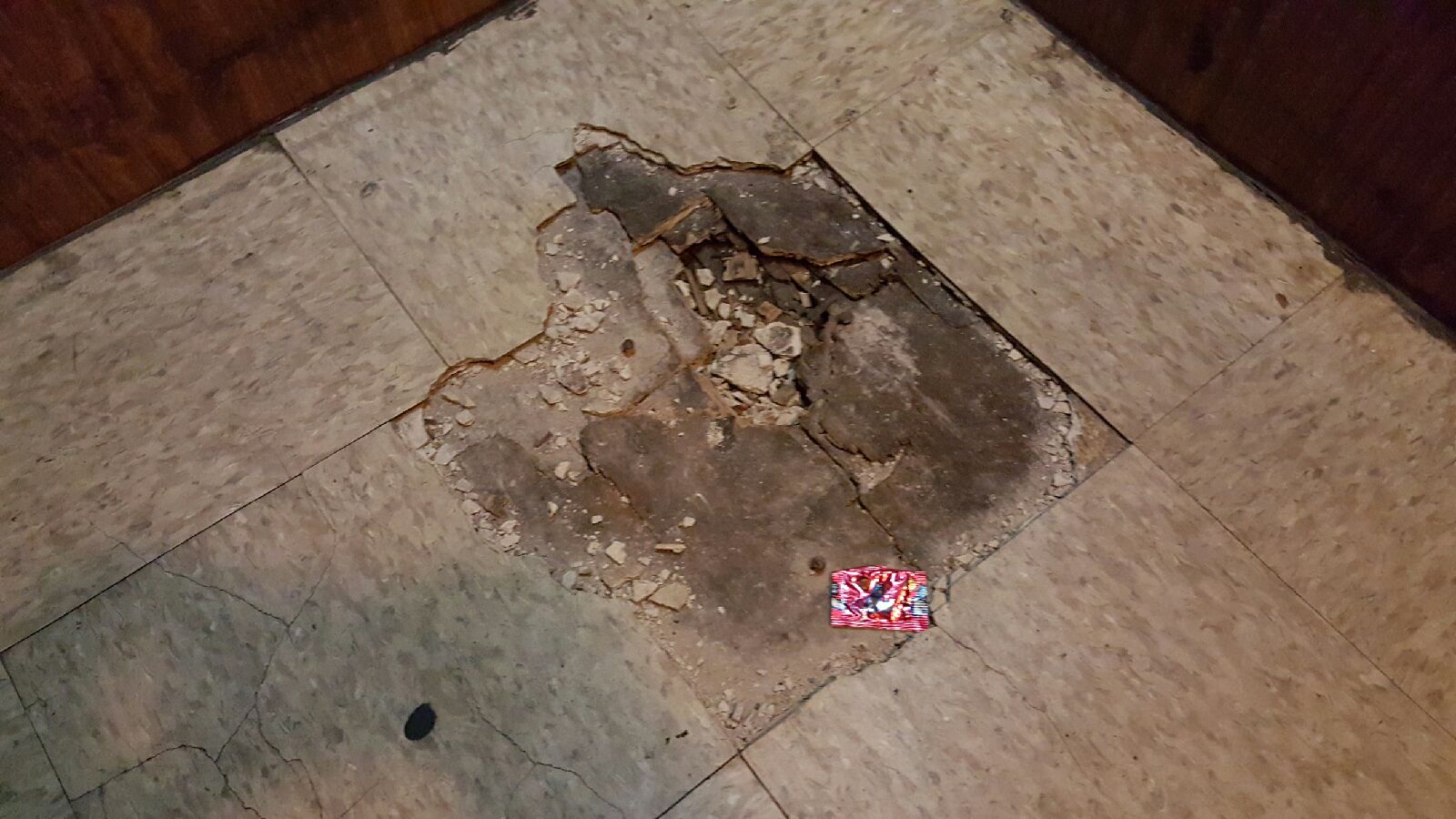
  Hole in the elevator cab floor

The reason decision makers prefer to work independent companies rather than a multinational firm is because we will actually show up for maintenance, respond to elevator shut downs and return phone calls in a timely manner.  While there is value in technology aiding in maintenance, what I see is companies using technology for a reason to decrease man hours to buildings because “it is being monitored 24 hours a day”.  Monitoring this elevator 24 hours a day would not have picked up on 36" of water in the pit or the hole in the elevator cab floor.

I always ask building owners “how often do you want to see your elevator person in the building.” .  Most building owners are fairly specific in their expectations[if given options], we then can tailor a maintenance agreement to their desires[assuming their desires are reasonable].  When we go to a building that has a OEM maintaining the equipment I ask “how often is your elevator person at the building”.  They may say “once a month”, I ask “do you see them once a month or do you get a bill once a month”, typically the response is “I get a bill once a month and haven’t seen anyone in a long time” or “I don’t know when they come”.   Many companies do not leave maintenance records in the elevator machine room so it is impossible for building owners to know when their elevator is being visited by their maintenance provider. 

I agree there is a tremendous value in analytics and using technology to improve our services.  But, beware when the sale of technology moves more into smoke and mirrors in order to increase profits than to provide superior service.  I believe there is a benefit to having an experience person looking over critical building components on a regular basis.  Ultimately a building owner needs to have all of the information on benefits and service offering choices in order to make and an educated decision on what is best for their building.  If you’re a building owner START ASKING QUESTIONS about your elevator maintenance.  

Chicago Elevator Association meeting – October 8, 2015 6:30pm – Presenter is GAL


If you have any questions or would like information from Colley Elevator you can go to www.colleyelevator.com, email Craigz@colleyelevator.com or call 630-766-7230.