Sunday, July 31, 2016

Traction elevator motors – Foot vs Flange

One of the main questions we get asked when ordering controller systems when keeping existing machines is if it is a foot for flange mount motor.  When I first started ordering equipment I had no idea what the difference between them was and said “what’s the difference, put the order through and we will figure it out”.  Well there is a big difference, I learned this the hard way after many visits to a building getting the different pieces of information.  Nothing ground breaking here, just some information on the difference between the two traction motors.

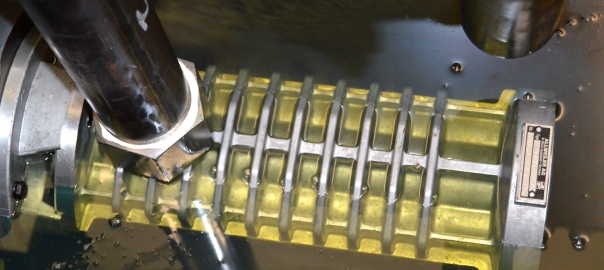
Foot mounted motors - As the name describes, this motor has feet it sits on.  This motor is an interesting motor with what looks like a fan on top.


Flange mounted motors - This is mounted with a flange and sticks on the machine, there are no feet.


Flexible couplings - This is a huge time saver and will improve ride quality.  If you don't know what this is, check it out!  Electrical Motor Repair company has a pretty good product to help with the installation of new motors. 

http://www.elevatormotor.com/


If you have any questions or would like information from Colley Elevator you can go to www.colleyelevator.com, email Craigz@colleyelevator.com or call 630-766-7230.

Sunday, July 17, 2016

Elevator preventative maintenance – City of Chicago

Over the last several weeks we have been to many buildings in the City of Chicago visiting older elevator equipment.   I was reviewing a portfolio of buildings that need pricing for maintenance agreements, violations and mandate work and when going through this on Saturday night I saw some interesting items.

As elevator professionals it is our job to do the best we can with the equipment we are maintaining.  As elevator companies we are to guide building owners to the correct decisions on a good maintenance program for the building and give mechanics time to complete maintenance.  As building owner you are responsible for contracting with the responsible vendor and take recommendations for equipment replacement and a good maintenance program.

I’m not sure where the ball dropped on these buildings but it is apparent someone fell asleep at the wheel.  Some of these situations do not happen over night it is years in the making.

[Pit full of water or oil]


Take away

Building owners – Hire a responsible elevator contractor, least expensive is not always the best.  Most expensive is not always best.

Elevator companies – Make sure the elevator mechanics have time to complete elevator maintenance at buildings.

Elevator professionals – If the company gives you time to do elevator maintenance, do something with the time. If you do not have time to do maintenance and want to do maintenance.  Find a company who will give you time to do maintenance.

While the three points above appear to be black and white, please note there are so many variables for each entity that throw a wrench in the simple formula.  Building owners had a good elevator company whose management changes[and it becomes a not so good company], elevator companies have personnel changes, elevator professionals get over burdened with broken elevators or encounter strange problems that occupy more time than anticipated to repair. 


If you have any questions or would like information from Colley Elevator you can go to www.colleyelevator.com, email Craigz@colleyelevator.com or call 630-766-7230.

Sunday, July 10, 2016

Anatomy of a hydraulic power unit

I found this in my email and it has some great information.  This is a repost from https://schmelevator.wordpress.com.

Fixed Pump

The anatomy of a hydraulic power unit

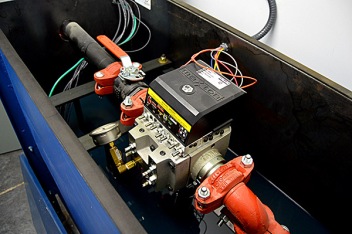
A hydraulic tank with a submerged pump, valve and motor.When it comes to hydraulic elevators, there is a crucial piece of the system that often goes unnoticed. It gets little attention because on the outside, it looks like a big rectangular box.
Little do most people know that this box is actually filled with the components and the oil that make the elevator move. Without the tank and all of the parts inside, the jacks won’t go up or down and the elevator won’t move. So let’s peek inside the box and see what makes everything work.
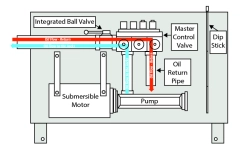
The hydraulic tank consists of the following components:
  1. Tank
  2. Submersible Motor
  3. Pump
  4. Master Control Valve
  5. Negative Pressure Switch
  6. Integrated Ball Valve
  7. Vibration Damping Mount
  8. Dip Stick
  9. Oil Return
  10. Muffler
  11. Hydraulic Oil

Tank Final-01
A basic tank diagram.
Tank  – The tank has the primary purpose of holding the oil that raises the elevator, but it also houses the other important components. The size of the tank is dependent upon the number of floors and the components required, and Phoenix Modular Elevator has several sizes of hydraulic tanks to meet any need. In general terms, most two-stop elevator tanks hold approximately 80 gallons of oil.
Submersible Motor – One of the reasons that a tank seems so unremarkable is that the primary components all fit inside the tank, including a motor designed to remain submerged in hydraulic oil. The motor powers the pump that pushes the jack up, while gravity does the work coming down.
Pump – In a hydraulic elevator, the main function of the pump is to push the oil into the jack to lift the elevator. The pump is submersible and attached to the master control valve with a length of pipe called the pump/valve connection pipe. When powered by the motor, the pump pushes the oil through the valve and into the cylinder (jack) or hydraulic jack system.
Master Control Valve – This valve is where the motion profile is set, which is a fancy way of saying this component makes the elevator run smoothly, efficiently and safely when delivering its payload. Without properly setting this valve, the elevator would either run too fast or too slow without easing into starting and stopping. This would increase Dramamine sales but decrease the enjoyment and safety of the elevator ride.
Negative Pressure Switch – Part of the master control valve, this switch ensures there is always pressure in the system so the hydraulic elevator will not fall rapidly due to decreasing pressure. Keep in mind, failure of a hydraulic elevator is rare and this component makes it even less likely there will be any unexpected drops.
Integrated Ball Valve – This is a shutoff valve located in or just outside the tank between the master control valve and the pipe that leads to the hydraulic jack. The purpose is to give licensed elevator mechanics a way to conveniently and safely shut off the flow of oil when servicing the elevator or replacing parts.
Vibration Dampening Mount – With a motor and pump powerful enough to lift an elevator, there has to be a little bit of shakin’ goin’ on. To combat the bad vibes, everything is mounted on pieces of metal suspended by neoprene donuts that cushion the parts and reduce shaking.
Dipstick – Inserted in every tank is a dipstick that has markings to indicate the maximum and minimum oil levels required for safe operation.
Oil Return – When the elevator comes down, gravity does the work, but the oil has to get back to the tank. To do this, the oil returns to the tank in the same pipes it went out until it gets to the master control valve. Once there, the valve again regulates the speed of the descent by controlling the flow of oil back into the tank.
Muffler – The oil flows in pulses and can create vibrations and loud sounds. To combat this, a muffler is placed either in the tank or just outside the tank to quiet the flow pulses and minimize noise.
Hydraulic Oil – Hydraulic oil used to be petroleum based but now vegetable based oil is also available to ensure it is environmentally safe should a leak occur.
To function properly, the tank should be set level, be free from leaks, be set away from walls and be clean. Also, the tank should be in a climate-controlled machine room. The tank is the heart of the hydraulic elevator and needs to be cared for to ensure a long life of dependable service.
Repost from - https://schmelevator.wordpress.com
If you have any questions or would like information from Colley Elevator you can go to www.colleyelevator.com, email Craigz@colleyelevator.com or call 630-766-7230.

Sunday, June 19, 2016

Old Elevator equipment & elevator maintenance

There is a building in the close western suburbs that has an elevator from the early 1960’s.  It is a Otis traction elevator with automatic doors.  One of our sales people went the building when he was out knocking on doors and they were interested in a competitive bid, it is an old elevator, the sales person did not open the hoist way doors so we assumed it was just a old beater elevator.  The building was non responsive after he sent the information to them.

I received a call a few months later because someone else who works here knows the person who is in charge of facilities.  They are looking for a short term and long term plan so I set up an appointment with the building. 

When I went to the building I found was the hoistway filled with dust, this elevator must have not been cleaned for 20+ years. There is so much dust on everything that it is a fire hazard.  I will say there may be a vent somewhere because there is a newer light bulb, newer being 20 years or so[it is an energy efficient bulb].

[this is the pit light]

The company who is maintaining the elevator has been taking the buildings money for 30+ years for elevator maintenance.  I would think once every five years to vacuum the hoistway is not unreasonable.  If there is a vent in the hoistway shooting dust or material in the hoistway, send them a quote to clean the hoistway.

The building also called their current company over to get some modernization options, a salesmen, mechanic and a supervisor all went to the building and they were laughing at the equipment and telling them it is junk.  The equipment is old, we don’t see very much of this stuff around anymore but, if you have been taking a buildings money there could be a better way at addressing the customer.

[Sherman tank of door operators - oil check]

I get the idea that old elevator equipment is hard to get motivated to clean but we as elevator professionals should treat each customer with respect and do what we can with the time we have and the equipment that is in the building.  If the equipment is unsafe, it should be shut down, if the equipment is unreliable, it should be replaced.  It is up to the elevator company to remind building owners of what they need to do with their equipment.

The point of this is that if you are unhappy with your current maintenance provider, there are other people out there.  This particular building manager didn’t know there was anyone else who worked on elevators, so while unhappy they stayed with the company.  And be aware of your elevator maintenance agreement and when it is up for renewal, they typically auto renew so keep your eyes open, elevator maintenance contracts are unforgiving.


If you have any questions or would like information from Colley Elevator you can go to www.colleyelevator.com, email Craigz@colleyelevator.com or call 630-766-7230.

Sunday, June 12, 2016

Proprietary Elevator Modernization Equipment

I have been to a few elevators with proprietary equipment in the last week.  Both where two car buildings about 10 floors.  One was a Schindler Elevator controllers and one was Fujitech Elevator controllers.  Both wanted quotes to resolve violations for some elevator mandated items that should have cost anywhere between $5,000 to $8,000 with market pricing.  The buildings got quotes over $10,000 from their current elevator companies in each case.  My opinion is that a building should get fair pricing to do their elevator work not less not more.

The issue a building will run into when they modernize their elevator system with proprietary equipment is that the company they choose to complete the modernization may be their only source for future maintenance.   This also leads into above market pricing for future needs as the company will know they have a building in a spot where it will be difficult to move companies for maintenance.

The story goes as such.  Building goes out for bid for elevator modernization, many buildings do not know much about elevator control systems or the difference between companies.   They get a reasonable bid from a OEM[Otis, Schindler, Fujitech, Mitsubishi, Kone, Thyssen] and they move forward with the project. After installation they find that maybe their maintenance agreement keeps going up in cost, OT calls are very expensive[$500.00 per hour], other items they need to address are above market price, etc.  They begin looking around for maintenance pricing and find there isn’t a lot of interest from independent companies or other OEMs in maintaining the equipment because resources are limited from the OEM for repairs and trouble shooting.

Both buildings where happy with the service mechanics and quality of work of the modernization, just not happy with the pricing.

How to avoid this?  If you are not working with someone you can trust for elevator services, hire an elevator consultant and let them know you do not want proprietary equipment.  Make sure your elevator consultant is qualified and does not receive preferred treatment from any one elevator company[if you have any questions on this call me]. Many OEMs will say their equipment is nonproprietary, this may not be true or true to the definition that you as a building owner are looking for.  You want a elevator control system that any one of the 30 or so elevator contractors around the Chicago land area can service, that they do not need a service tool and can readily get technical support.

Outcome of buildings with proprietary equipment – You will have other companies come and see there is no possibility of working with the building in the future and more than likely give you a higher price than they would give to a building where they would have the possibility of working with in the future.   One building I went to said a vendor came in saw the equipment was Fujitech and instead of measuring anything for this particular installation shined his flashlight in the pit and sent over a quote which was more than the OEM quote because they were not interested in doing the work at this building.  If you cannot get competitive bids for elevator work outside the maintenance agreement it puts you at a significant disadvantage. 

[this particular controller had its motor drive control & display removed so no one could work on the elevator controller, the CPU attached to it was locked out from anyone but the elevator company whom installed it]

Elevator maintenance on proprietary equipment If you have proprietary equipment, many companies have personnel and tools to work on them, make sure you ask them questions if they have experience with your control system.  Some systems the elevator contractor can work on better than others if they are not the installing firm.

What is nonproprietary control equipment?  Smartrise Engineering, Motion Control Engineering, Virginia Controls, Vertitron Midwest, GAL Manufacturing among others.  If you have questions when going through the process, send me an email, call me, even if we are not bidding the project I will walk you through what you should know.   As an independent company we have an interest in making sure buildings are getting nonproprietary equipment installed by a reputable company. 

Any questions on elevator consultants - Email me and I can put you in touch with a few good consultants that will look out for your best interests.  There are many good ones and there are ones that you should avoid.


If you have any questions or would like information from Colley Elevator you can go to www.colleyelevator.com, email Craigz@colleyelevator.com or call 630-766-7230.

Sunday, June 5, 2016

What documents should be in an elevator machine room

With the new codes coming out that require different items to be in the elevator machine room there seems to be some general confusion of what qualifies as maintenance records, maintenance control plans, testing records, etc.  The City of Chicago will be requiring these items shortly and the State of Illinois jurisdiction areas have required these for some time.

Every elevator machine room requires the following.

1.    Maintenance records
2.    Oil logs
3.    Maintenance control plan
4.    Testing records
5.    Code data tag

Maintenance records - The amount of maintenance records required varies depending if you are in Illinois or in Chicago’s jurisdiction.   If your maintenance provider does electronic maintenance records you as a building owner must print these out and put them in the machine room.  It is the building owners responsibility to have these in the elevator room.  Typically the elevator contractor will provide the records, however, if your contractor does not, you will need to acquire them and put them in the room.


Oil logs – There needs to be documentation of any oil added to the elevator system.  Our oil log is located in the maintenance record packet which you see pictured above. 

Maintenance control plan[MCP] – A document indicating how the elevator is maintained needs to be located in the elevator machine room.  Some companies are using stickers with phone numbers, some companies are using CDs, some companies are using universal maintenance information.  In my opinion a binder with escalator maintenance information in it for a traction elevator does not qualify as a correct MCP.


Testing records – CAT 1 & CAT 5 records need to be located in the elevator room.


Code data tag – This is a tag that indicates when the elevator was installed and what modifications have been made to the elevator system.

If your machine room does not have these documents, get your contractor to provide them.  There are plenty of reasons for the elevator to fail inspection, don’t let the elevator fail for some of the easy items that should be provided.


If you have any questions or would like information from Colley Elevator you can go to www.colleyelevator.com, email Craigz@colleyelevator.com or call 630-766-7230.

Sunday, May 29, 2016

Elevator modernization requirements – “work by others”

Many times when we are bidding elevator modernization the building owners do not know what they are required to do.  Or the “work by others” portion of everyone’s contracts.  Even after 2 other companies have come by I ask them if they know what they are required to do for their electrical and fire alarms, sometimes I get, “I don’t know, no one said anything”.  These can be fairly sizable information omissions if we do not communicate this to building owners.

Right above the price of the agreement we write the “work by others”, many companies have this away in small print in their terms and conditions which could be 30-40 items long many items have nothing to do with that specific installation.

I have put a general list together for building owners to review when contemplating modernization for “work by others”.  Remember all jurisdictions are different so this is not an all-encompassing list for all, just a start.  These costs can be $10,000 or more depending on your existing fire system.

-          Suitable environment for new elevator equipment
o   Temperature 45 to 95 degrees Fahrenheit
o   Relative humidity of 85 percent
-          Provide adequate electrical power for lighting, tools, hoisting during installation as well as for normal operation of elevator system
-          Provide fire recall detectors at each landing, machine room to be tied into a building fire panel
-          Higher rise buildings may need an elevator fire panel in the lobby or in the fire command room
-          Provide heat detectors if there are sprinklers present
-          If there are sprinklers present you must install a shunt trip
-          If you have a heat detector in the hoistway you must install a smoke detector
-          NEC code complaint main line disconnects & associated outlets - labeled
o   Heavy duty fused lockable for mainline & car lighting with proper earth grounds
o   GFCI in the machine room and in elevator pit
o   Regular outlet if sump pump is in and/or required in elevator pit
o   Telephone line adjacent to elevator control system
o   Machine room light swtich[not on timer]
o   If the building has a generator and the elevator is run on the generator a pair of wires must be run to elevator controller so we know the building is on generator power

[Mainline disconnect, GFCI & machine room light switch, light switch cannot be on timer]
 [110vac lighting circuit disconnect]
  [Elevator pit light swtich, GFCI]
  [Pit light in back left corner & fire alarm - requires repair]
  [Machine room fire recall detector]
  [Fire recall relays - tied into fire recall detectors & panel]
                                     [Fire panel in lobby]

Remember that all areas have different rules and requirements and before getting pricing for work consult a competent elevator company for guidance.  If I forgot an item that should be on the list let me know.


If you have any questions or would like information from Colley Elevator you can go to www.colleyelevator.com, email Craigz@colleyelevator.com or call 630-766-7230.