Saturday, January 9, 2016

Chicago elevator maintenance needed!

Over the last week we have been to a few buildings that either do not have a maintenance agreement or have elevator maintenance and the company is not showing up.  The reason a building has elevator maintenance to ensure you have a safe and reliable elevator system.  Over New Year’s we had another elevator related death in New York City.  Make sure your building has a reliable elevator company performing maintenance and completing the annual testing of the elevator system.  If we all work together we can prevent some of the accidents from occurring. 

I went to a building in the City of Chicago and saw an elevator was about 15 – 20 years old.  A 15-20 year old elevator is not a very old elevator system and elevators can last a very long time if they are maintained properly and cared for.  It appeared at one time maintenance had been performed at the building but as of late nothing had been completed. The last maintenance company of record at the building was a non union firm.

I surveyed the elevator equipment and found some common items that needed to be taken care of for buildings that do not have maintenance with a reliable elevator service provider.

[This water has been in the elevator pit for so long there is a film on the top]


                                                    [Cables starting to rouge]

                                                      [Machine gear wearing]

Noted items
Water in the pit
Emergency phones not working - Very important
Cables starting to rouge
Machine gear wear
CAT 1 testing over due
Fire testing not being completed monthly[last fire service exercise 6/19/15]
Light bulbs out
Basement door needed new door gibs and sill vacuumed out - Elevator shut down looming

This is a reminder to building owners to make sure that you have a maintenance agreement with a reliable elevator service provider.  Many times you may be getting bills in the mail but no one is going to your building, have the company put a log chart in the machine room.  Having a log chart in the machine room not only helps the building understand when the elevator technician comes out, it also is a code requirement in the State of Illinois and City of Chicago.  It is our job to make sure you get all of the life out of your elevator system by performing preventative maintenance and correcting issues before they become a large expense.  The first picture shows water in the pit which has rusted the pit equipment significantly.  We should catch that immediately and help the building move on removing the water.  Now the pit equipment needs to be sanded and painted or replaced.


If you have any questions or would like information from Colley Elevator you can go to www.colleyelevator.com, email Craigz@colleyelevator.com or call 630-766-7230.

Sunday, January 3, 2016

Cold weather and your elevator system

We have been having a warm winter until the last few days which have been more of a typical Chicago winter.  This is a reminder to building owners to keep your machine rooms warm to avoid any head aches from cold weather.  This is a repost from last year when we had extreme cold temperatures for a prolonged period of time.

 We have been visiting the same customers in the morning the last few days that indicate their elevator “does not work”.  When we get to the building we discovered the elevator room is ice cold and the hydraulic oil needs to be heated up.  We typically have the same conversations with building ownership about keeping their machine rooms warm.

The temperatures that hydraulic elevators fluid should be is

Operating temperature  - 80 to 150 degrees Fahrenheit
Operating temperature  - 100 to 130 degrees Fahrenheit

Source - Maxton Valve[www.maxtonvalve.com] - Maxton valve is one of the largest valve suppliers in North America.

Oil composition when it gets cold – When hydraulic elevator fluid gets cold it becomes thicker or has a higher viscosity. 

Viscosity definition - The viscosity of a fluid is a measure of its resistance to gradual deformation by shear stressor tensile stress. For liquids, it corresponds to the informal concept of "thickness". For example, honey has a much higher viscosity than water.

How does this translate to your elevator – In our Chicago area environment we use a certain hydraulic fluid that offers more flexibility between hot and cold environment because of our seasons in the Chicago area.  Due to significant swings in temperature in our environment when it is very cold the oil gets thicker and the valve and elevator system will not operate correctly causing a potential issue with leveling or entrapment.  The reverse occurs when it gets very hot and the oil gets very hot.  Both scenarios cause safety issues for the elevator riders.  If we always had cold or warm temperatures we could use a different hydraulic fluid that would be more appropriate for a hot or cold environment.  But! We live in Chicago.

What not to do – As a building owner it is very important to have your elevator running.  Some building owners take it upon themselves to improvise to get their elevators running on cold days with space heaters.  While the installation of space heaters is a short term solution, it isn't a safe long term solution as you will see space heaters in non-occupied machinery spaces that can malfunction causing smoke and fire hazard.  The space heaters also can overload your electrical circuits causing your breakers to trip.  The electricity costs to run multiple heaters in one year would probably be significantly more than the installation of a elevator tank heater.

[Space heater on the valve]
[Space heaters on the valve and oil tank]
                                              [Space heater in the elevator pit]

Recommended solution – Install a tank heater to be turned on during the winter months.  This is a safe alternative to what you see above.

[www.nylube.com]

Hydraulic tank heater[can cost $500.00 to $1,000.00] - The heating element goes into the hydraulic tank and will maintain an constant temperature.  There will need to be a 110vac outlet available adjacent to the elevator machine to plug into.

Take away - If your elevator machine room is 30 degrees on cold days, your elevator will not work properly.  If you cannot safely heat the elevator machine area to an appropriate temperature contact your elevator maintenance company to give you a price on a tank heater.


If you have an questions or would like information from Colley Elevator you can go to www.colleyelevator.com, email Craigz@colleyelevator.com or call 630-766-7230.

Sunday, December 27, 2015

Elevator solid state motor starters - Put one on your elevator!


We received a call this Christmas Eve night and the symptom was the starter wasn’t working properly.  Not only was this bad timing but the parts needed to begin resolving the issue where not in stock.  This particular motor starter was an across the line starter with two different starters from 1969.  What this means is that there are two separate line starters that share electrical load. 


The older style mechanical starters are fairly robust and last a very long time.  But they do age and will eventually cause problems.  The starters above have lasted almost 50 years and most likely will continue working well with the correct replacement parts.

The newer style mechanical starters are not made as well as the older style and typically do not last very long compared to their predecessors[10-15 years compared to 20-40 years].

In this particular starter you have starter contacts, coil, or auxiliary contacts that would typically be your issues why the motor starter is not working.  We have been seeing more failures of these mechanical starters lately[typically on nights and weekends-See Murphy's Law].  Being there are many different starters that all have different parts it at times causes issues getting the parts right away.  Even though we have hundreds of starters in stock it doesn’t mean the elevator service company will have the parts for your starter and without the correct parts it means your elevator will not be running until the correct parts are installed.

If you have an older building we would recommend the installation of a solid state starter.  There are a few different models of solid state starters out there but our preferred starter is a Siemens soft start. 
 
 
Benefits

Electrical savings
Ride quality improvement – Smoother operation
Less replacement parts
Advanced motor protection
No starter noise – no “bang” when elevator starts

If the building on Christmas Eve night had a Siemens soft start we most likely would have to just replace the solid state board and the elevator would have been up and running.  If you have a building and are curious if this is a good option for you, call your elevator service company and get information on a solid state starter.  The cost for the installation is between $2,000.00 and $5,000.00.  The starter will pay for itself over its life and shut down resolution is very quick.  Sometimes it is not about the money but making sure the elevator is working for the users.  The Siemens starter will give the building a more reliable elevator.

If you have any questions or would like information from Colley Elevator you can go to www.colleyelevator.com, email Craigz@colleyelevator.com or call 630-766-7230.

Tuesday, December 15, 2015

What happens when a demo contractor removes an elevator - Repost

Monday December 14th, 2015 in Chicago we had a Fire Fighter fatality due to a elevator being removed and the area not being secured and brought into safe condition.  This is another reminder.  HIRE AN ELEVATOR CONTRACTOR AND MAKE YOUR BUILDING SAFE.

Repost from 8/22/15

We are getting involved with larger projects that the elevator is a small portion of the overall project.  During the last 5 years we have seen time and time again that a general contractor may opt to have their demolition company remove the elevator system.  This is a dangerous spot to put the demolition contractor as well as puts the building owner in a peculiar position.  All work inside the elevator shaft should be completed by elevator contractors and trained elevator personnel.

Case 1 – There was a building that I went to where the demo team removed the elevators but they forgot to secure the hoistway so there are fall hazards in a building that did not have power.  The fall hazard was about 50'.


Case 2 – There was a building that was going to have a demo contractor remove the freight elevator.  The bi parting doors are in the open position.  


Both of these scenarios are not safe and should not be completed.  If you are a general contractor or construction manager, an elevator company may be a bit more expensive than your demo team but they will be 100% safer.


If you have any questions or would like information from Colley Elevator you can go to www.colleyelevator.com, email Craigz@colleyelevator.com or call 630-766-7230.

Sunday, December 13, 2015

Elevators bad & ugly pictures

During our travels this week we saw a few interesting elevators.  Here are a few of the more interesting elevator systems we saw this week.

Elevator #1 - This was an elevator at an old building on Milwaukee Ave in Chicago.  Believe it or not when someone ran the elevator oil was spraying everywhere.  I would put the elevator’s age at early 1960’s.   The unfortunately part of this elevator system is that if the building decides to repair the hydraulic power unit they will have to replace the cylinder because it most likely is a single bulk head cylinder.  It is possible that the cylinder has been replaced but I was not going to run this elevator up to find out.


Take away – Have your elevator maintained, this elevator very well could be operating if it was maintained over the years.  Being it was neglected it now looks like it was discovered in the Titanic wreckage.

Elevator #2 - This was an elevator that we do maintenance on that when the mechanic walked in for maintenance the elevator did not work.  We went through the fault codes on the controller then opened up the elevator door and found this.


Take away – An apartment building’s elevator is not the owner’s storage closet. 

Elevator #3 - This was an elevator that a building owner wanted repaired.  This elevator most likely is from the mid 1960’s and appears it has been rewired once or twice.


Take away – If your elevator system gets to this point the building owner really should be replacing the elevator system.  While this elevator may work, when you get into rewiring the elevator system to this extent you get into a area where it may not operate as it was designed to.  This elevator control system serviced the building for 50+ years and is ready to have a new system take its place so a building can have safe and reliable elevator service.


If you have any questions or would like information from Colley Elevator you can go to www.colleyelevator.com, email Craigz@colleyelevator.com or call 630-766-7230.

Sunday, December 6, 2015

Elevator door restrictors can prevent accidents

I just read an article about someone in New York trying to escape from a stuck elevator and falling down the elevator shaft.  From the look of the building it looks like a pretty old building with a collapsible gate and a swing door.  This is a reminder to everyone the safest place to be when an elevator is stuck is INSIDE THE ELEVATOR.  Stay and wait for help to come. 


Credit - http://ditmasparkcorner.com/blog/crime/man-falls-down-elevator-shaft-in-building-managed-by-shamco/

That brings me to the point of having door restrictors installed on all elevators.  I’m not sure if in New York has a requirement that all elevators shall have door restrictors.  Every elevator in the State of Illinois should have them by now as it was a requirement in the City in the 1990’s and in the rest of the State it should have been completed by 1/1/14.

There have been occasions where an elevator gets stuck between floors and passengers try to get out of the elevator by either opening the door from the inside or outside and the passenger tries to jump and out falls underneath the car down the elevator shaft.

This is where the door restrictor comes in; the door restrictor restricts access to the elevator when it is out of the door zone range. This eliminates the possibility for injuries or fatalities. The main point of the door restrictor is to restrict access to the elevator cab when it is outside the door zone to prevent injuries or fatalities. When the elevator is not in the door zone, it is very important to have trained personal on site to assist in the rescue.

There are quite a few different door restrictor options on the market now. A few door restrictor options are listed below.

Electromechanical door restrictor – An electromechanical door restrictor can be used on most elevators, however, the negative of this is that there are batteries and a lot of parts that can malfunction.


[Adams Hatch Latch door restrictor]

Mechanical door restrictors – The mechanical door restrictor is the most reliable door restrictor.  You can have this installed on the elevator’s door clutch or you can put one on the back of an elevator car door and install flags on the hoist way.  Not all elevators will have enough room to install mechanical door restrictors.


[GAL door restrictor on the clutch]

There is a negative to the elevator door restrictor, it does cause entrapments if it is not working properly.  Which is a reason we find that many of the door restrictors are disabled.  For elevator industry people, lets make sure our door restrictors work, if the electro mechanical restrictors aren't working have the office sell them a mechanical restrictor to the building owner.  The cost of a door restrictor is much less expensive then someone falling down the hoistway.

Credits 
Elevator Radio Show – www.elevatorradioshow.com
GAL –www.Gal.com
Adams Elevator - www.Adamselevator.com

If you have any questions or would like information from Colley Elevator you can go to www.colleyelevator.com, email Craigz@colleyelevator.com or call 630-766-7230.

Sunday, November 29, 2015

Freight elevator loading classifications

Every elevating device has a loading classification pertaining to the capacity of the elevating device and to the nature of the loading method. It is important that the loading classification matches the intended use of the elevating device in order to ensure safe operation.

Class A Loading

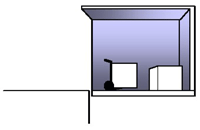
Most passenger elevator systems and standard freight elevators are designed as Class A, or “General Freight Loading”. The actual amount of a one-piece load being moved on to or off of the elevator cannot exceed 25% of the stated capacity of the elevator system. For example, although the capacity of the elevator may be 2,000 lbs (907 kg), the actual limit of a one-piece load is 500 lbs (226.75 kg). As well, the loading or unloading of the elevator is restricted to manual means or to a hand truck. In the event that a hand truck is used the weight of the equipment must be included as part of the 25% loading restriction.


Class B Loading

This class pertains to freight elevators that are intended for the transport of motor vehicles only, up to the stated capacity of the elevator system.


Class C Loading

NOTE: Class C loading is not permitted for accessibility lifts or for LULA elevators.

Class C1 Loading

This class allows industrial truck loading or unloading of the elevator system. The combined weight of the industrial truck and the load cannot exceed the stated capacity of the elevator. The loading device can remain on the elevator during operation.


Class C2 Loading

This class allows for the loading of the platform at 150% of the stated capacity of the elevator. In most cases, this allows for a one-piece load that equals the capacity of the elevator to be loaded with a forklift or motorized lift truck on to the platform of the elevator. The loading device must be removed prior to the operation of the elevator.


Class C3 Loading

This class allows for heavy concentration loading where the static load during loading and unloading does not exceed the rated load. The combined weight of the load and equipment must not exceed the stated capacity of the elevator system. In practice, Class C3 elevators are most often designated to support single piece loads equal to the capacity of the elevator.


Much of this information was taken from two web pages

www.delawareelevator.com & www.delta-elevator.com


If you have any questions or would like information from Colley Elevator you can go to www.colleyelevator.com, email Craigz@colleyelevator.com or call 630-766-7230.